
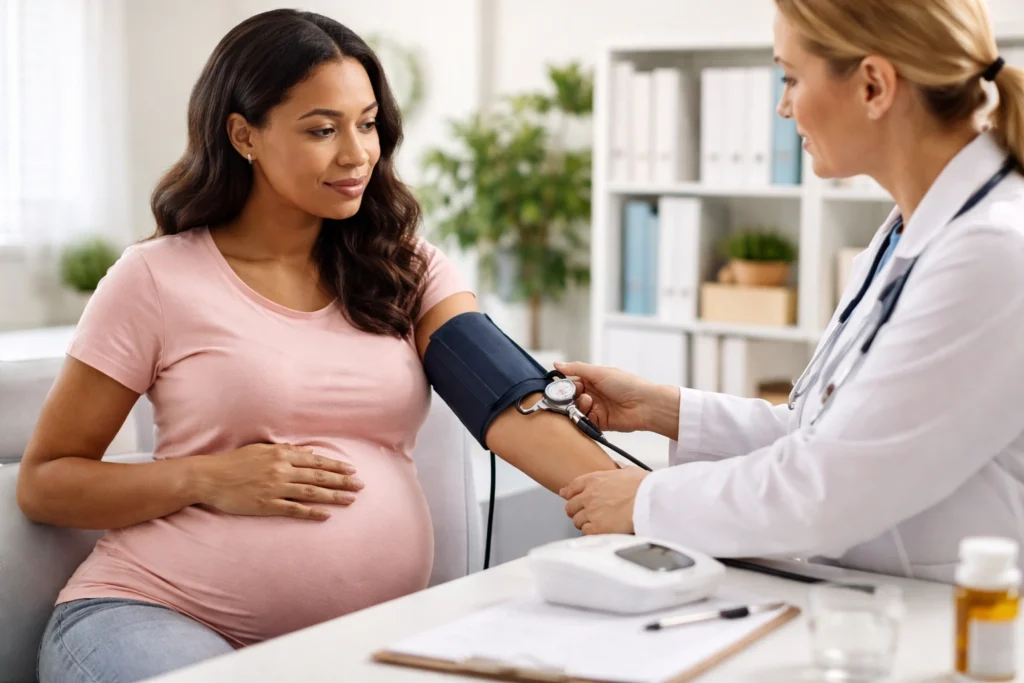
Introduction:
The beautiful journey of pregnancy results in various bodily changes which women must experience. High blood pressure which doctors call hypertension requires special monitoring throughout pregnancy. When not managed properly the condition affects both the mother and her unborn child. By knowing the causes and symptoms and treatment methods expecting mothers can protect their health and safety throughout their pregnancy.
What is High Blood Pressure in Pregnancy?
High blood pressure in pregnancy occurs when the force of blood against the artery walls becomes too high. During pregnancy people experience hormonal and physical changes which lead to conditions that cause their blood pressure to exceed normal safe levels.
Doctors usually diagnose high blood pressure when readings reach 140/90 mmHg or higher. The condition requires constant medical monitoring because it develops during pregnancy.
Common Causes of High Blood Pressure During Pregnancy
Common causes include:
First-time pregnancy
Family history of high blood pressure
Obesity or excessive weight gain during pregnancy
Carrying twins or multiple babies
Pre-existing medical conditions such as diabetes or kidney disease
Age over 35 years
Types of High Blood Pressure in Pregnancy
Pregnant women experience various types of high blood pressure which medical professionals need to understand for effective treatment development.
1. Gestational Hypertension
The condition starts after 20 weeks of pregnancy and usually disappears after the woman gives birth. The condition needs medical observation because it has the potential to develop into serious health complications.
2. Chronic Hypertension
This type occurs when a woman already has high blood pressure before pregnancy or before 20 weeks of pregnancy.
Symptoms of High Blood Pressure in Pregnancy
High blood pressure often does not produce any visible symptoms for most people. The need for regular prenatal checkups exists because of this situation. Some women will develop warning signs however.
Possible symptoms include:
Severe or persistent headaches
Swelling in the face, hands, or feet
Blurred vision or sensitivity to light
Shortness of breath
Nausea or vomiting
Risks Associated with High Blood Pressure
The medical condition of untreated hypertension during pregnancy creates multiple health risks that affect both the mother and her unborn child.
Potential risks include:
The placenta experiences decreased blood circulation
The delivery of the baby occurs before the standard birth date
The baby is born with a weight that falls below the normal range
The placenta detaches from its normal position
Treatment and Management
The medical treatment of high blood pressure during pregnancy requires assessment of both the pregnancy stage and the hypertension severity. Doctors focus on protecting both the mother and the baby.
Common treatment approaches include:
The patient receives ongoing blood pressure assessments
The patient receives medication that meets safety standards for use during pregnancy
The patient attends scheduled prenatal health check-ups
The patient requires sufficient time for recovery while learning to handle stress
Conclusion
High blood pressure during pregnancy is a condition that should never be ignored. With early detection, proper treatment, and regular prenatal care, most women can manage it successfully and deliver healthy babies. Our website provides experienced professionals who will help you if you show symptoms or need guidance about your pregnancy. We help ensure a safer and healthier pregnancy journey.
