Dr. Supriya Mahajan

Uncategorized

Irregular Periods: When Should You See a Gynaecologist?

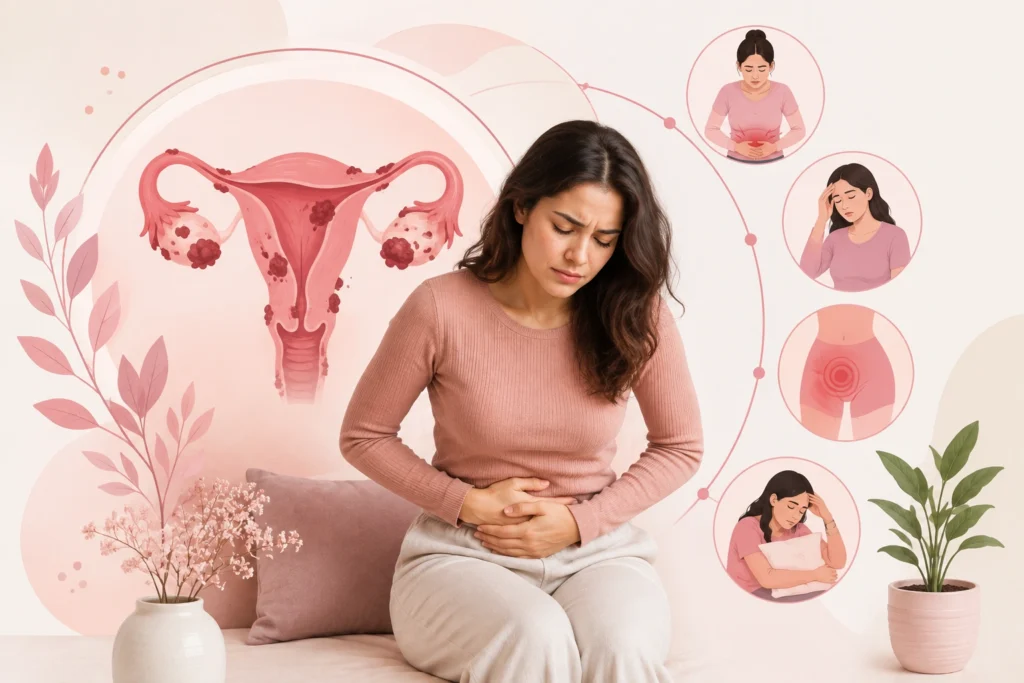
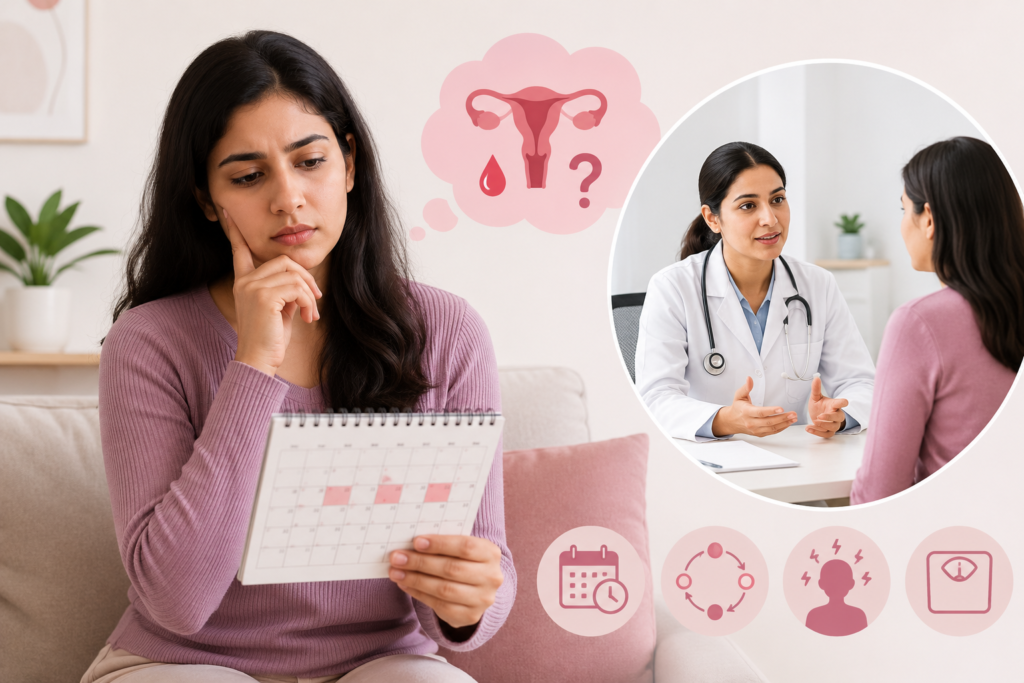
Irregular Periods: When Should You See a Gynaecologist? Introduction: Menstrual cycles are different for each woman. Having a regular period is usually a good sign that your reproductive health is fine. If your cycle changes occasionally, it is usually not a cause for concern, but if it happens a lot or all the time, you should not ignore it. If you have persistent irregular periods, consult a gynaecologist, and they can help discover the cause of the problem and make sure you are treated in time.  What Are Irregular Menstrual Cycles? A normal menstrual cycle occurs every 21 to 35 days and typically lasts between 2 and 7 days. Menstrual cycles are irregular when they do not happen normally. Menstrual cycles are considered irregular when: Your menstrual cycle occurs less than 21 days apart or more than 35 days apart.  Your periods are unusually heavy or unusually light.  Your periods last longer than seven days.  You might see some blood between cycles Your periods stop suddenly without pregnancy. This is not because of pregnancy. Common Causes of Irregular Periods Many things can affect your period, including: Hormonal Imbalances Your period is controlled by hormones. If you have something like polycystic ovary syndrome or thyroid problems or high prolactin levels, this can affect your hormone production and your period. Stress and Lifestyle Factors Stress is a thing that can affect your hormones, whether it is physical stress or emotional stress. If you do not sleep well, exercise too much, have sudden changes in your weight and eat unhealthy foods, these things can also affect your period. Your period can really be affected by stress and lifestyle factors. Polycystic Ovary Syndrome (PCOS) PCOS is a reason for irregular periods. Women with PCOS often experience irregular or missed periods, weight gain, acne, excessive facial or body hair growth, and difficulty conceiving. . Perimenopause As women approach menopause, their periods can change. Irregular bleeding is normal during this time. It’s still a good idea to see a gynaecologist. Uterine Conditions Fibroids, polyps, endometriosis and adenomyosis can cause bleeding and pelvic pain. Treatment Options for Irregular Periods Treatment depends on the underlying cause of irregular periods, which is different for each person, and it depends on what is causing the problem. The doctor may suggest some things to help, such as: Changing your lifestyle like finding ways to deal with stress and maintaining a healthy weight  Taking medicine to help with hormones or using birth control pills Getting treatment for thyroid problems or hormone issues Managing Polycystic Ovary Syndrome (PCOS)  Taking medicine to help with heavy bleeding If you have a treatment plan that’s just for you, it can really help you get your periods back on track and feel better overall. Conclusion If your periods have become irregular or are affecting your daily life, don’t ignore the symptoms. Early diagnosis can help identify hormonal disorders, thyroid conditions, PCOS, or other underlying health issues. Consulting an experienced gynaecologist can help you receive the right diagnosis and personalised treatment for better reproductive health. If you are looking for expert women’s healthcare, Dr Supriya Mahajan provides comprehensive evaluation and personalised treatment for menstrual disorders and a wide range of gynaecological conditions. Schedule a consultation to receive timely care and protect your reproductive health. Irregular Periods: When Should You See a Gynaecologist?

Irregular Periods: When Should You See a Gynaecologist? Read More »

Laparoscopic Ovarian Cyst Removal: Benefits and Recovery

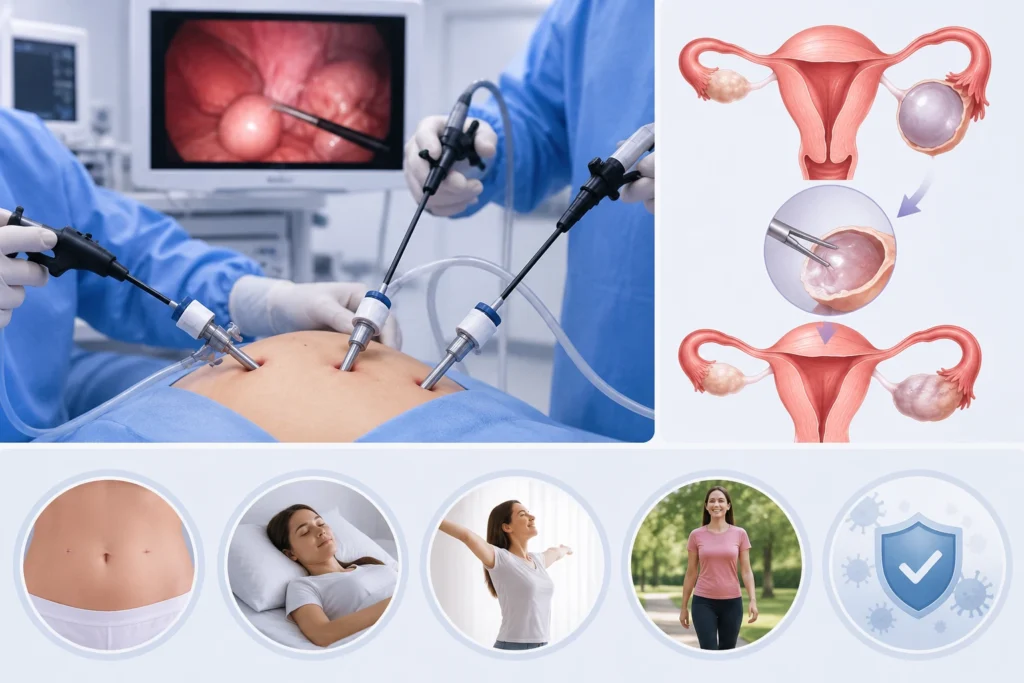
Laparoscopic Ovarian Cyst Removal: Benefits and Recovery Introduction: Ovarian cysts are filled sacs that grow on or inside the ovaries. Many ovarian cysts are harmless. Go away on their own. Some may cause pain, discomfort, and irregular periods. In cases doctors often suggest laparoscopic ovarian cyst removal as a safe and effective treatment. At Dr Supriya Mahajan’s clinic, doctors use laparoscopic techniques to ensure precise treatment with faster recovery and minimal discomfort. What Is Laparoscopic Ovarian Cyst Removal? So laparoscopic ovarian cyst removal is a kind of surgery that helps get rid of cysts without hurting the healthy parts of the ovaries. The experts do this by making small incisions in your abdomen and inserting a specialised tool with a camera known as a laparoscope. This tool helps the doctor see the ovaries and take out the cyst. This way of doing surgery is really good because it is not as invasive as the way of doing it. It is a choice for a lot of women who have ovarian cysts that are causing problems or will not go away. Laparoscopic ovarian cyst removal is an option for many women with ovarian cysts. Benefits of Laparoscopic Ovarian Cyst Removal Minimally Invasive Procedure Laparoscopic surgery for cyst removal is a small-incision surgery. It does not require a cut like traditional surgery. This leads to harm to the tissues around the cyst and a more comfortable healing process. Faster Recovery Time Most women can go back to their routines much sooner than with open surgery. They often stay in the hospital for a time. Many can resume their activities in a few weeks. Reduced Pain and Discomfort The small cuts from surgery usually mean less pain after the operation. This reduces the need for painkillers. It also makes the healing process more comfortable. Minimal Scarring Laparoscopic surgery leaves marks on the skin. These are less noticeable than the scars from traditional surgery. Lower Risk of Complications The small incision surgery helps lower the risk of infection, much bleeding and other problems that can happen with surgery. Preservation of Fertility In cases the cyst can be taken out without hurting the healthy part of the ovary. This helps keep the woman’s fertility and ability to reproduce.   Recovery After Laparoscopic Ovarian Cyst Removal Healing from surgery is usually easy and fast. Patients may feel some discomfort in the belly, bloating or tiredness for a few days. These symptoms get better over time. Some important tips for healing are: Follow the doctor’s instructions. Avoid work and lifting for the recommended time. Drink plenty of water. Eat a balanced diet. Go to all the follow-up appointments. Check the cut areas for signs of infection. Conclusion At Dr Supriya Mahajan’s clinic we focus on the patients’ needs. Use modern small-incision surgery methods. This provides treatment for ovarian cysts. We prioritise safety, comfort and reproductive health. Laparoscopic ovarian cyst removal helps women feel better from their symptoms. It also supports a smoother healing process. If you have symptoms of cysts or have been advised to have surgery, talk to Dr Supriya Mahajan. She can help you find the treatment options for your needs. Normal Delivery vs C-Section: What Is Safer for You?

Laparoscopic Ovarian Cyst Removal: Benefits and Recovery Read More »

Hysteroscopy: Why It Is Done & What to Expect During the Procedure

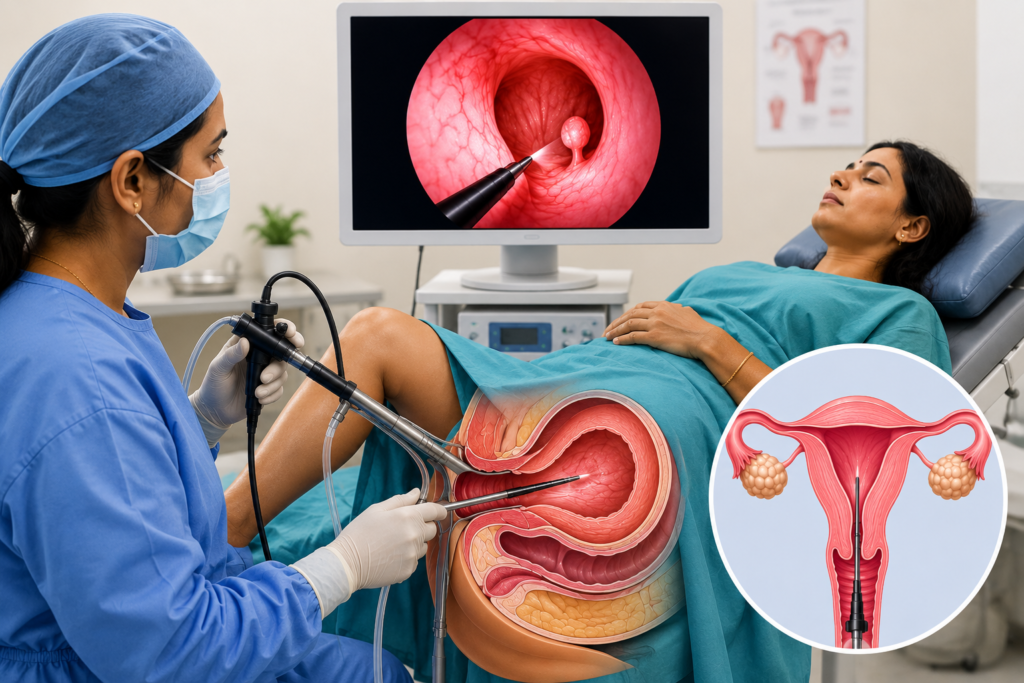
Hysteroscopy: Why It Is Done & What to Expect During the Procedure Introduction: Women may experience symptoms which include irregular bleeding and severe menstrual pain, along with difficulties in conceiving and experiencing repeated miscarriages. Doctors frequently use hysteroscopy as their method for diagnosing and treating uterine medical conditions. The procedure enables gynaecologists to conduct precise examinations of the uterine cavity while delivering treatment that needs no extensive surgical procedures. Dr. Supriya Mahajan’s clinic operates hysteroscopy services which use advanced technological equipment to provide medical treatment that keeps patients safe and comfortable throughout their entire procedure. What Is Hysteroscopy? The medical procedure known as hysteroscopy requires the use of a hysteroscope, which enables doctors to insert a thin, lighted instrument through the vagina and cervix to reach the uterus. Through the hysteroscope’s camera system, the doctor can monitor the internal structures of the uterus on a display screen. The procedure offers doctors two medical functions which they can use to diagnose and treat different gynaecological disorders. Why Is Hysteroscopy Done? Doctors recommend hysteroscopy for several medical reasons. The procedure enables doctors to discover uterine abnormalities while providing treatment for specific medical conditions. Common Reasons for Hysteroscopy Abnormal or heavy menstrual bleeding Irregular periods After menopause women experience bleeding Women experience pelvic pain which includes cramping Doctors use infertility assessment to detect fertility problems Types of Hysteroscopy  Diagnostic Hysteroscopy The procedure examines the internal uterine structure to find any existing problems. The method enables doctors to find fibroids and adhesions and polyps and structural abnormalities. Operative Hysteroscopy The medical team performs the procedure by inserting small surgical instruments through the hysteroscope to conduct immediate treatment of the identified medical issue. What to Expect Before the Procedure The doctor will recommend the following tests before the hysteroscopy procedure: The doctor will conduct a pelvic examination The doctor will conduct blood tests if required A pregnancy test will be conducted Patients should avoid food and drink for several hours in certain situations Recovery After Hysteroscopy Most women typically experience quick recovery, which enables them to return home on the same day. Common Temporary Symptoms Mild cramping Light vaginal bleeding Slight dizziness or fatigue The patients need to refrain from engaging in vigorous physical training and sexual contact during the first few days. The doctor will provide the necessary pain relief medications according to the patient’s requirements. Benefits of Hysteroscopy The procedure uses minimal entry points for surgical access The procedure requires no major surgical incisions Patients experience shorter recovery periods The procedure delivers precise medical evaluations which lead to treatment decisions The procedure requires a shorter duration of hospitalization The procedure helps some patients achieve better reproductive success Conclusion Hysteroscopy stands as a dependable and efficient method for detecting and treating multiple uterine disorders. The procedure provides women with a less invasive medical option which enables them to recover faster while achieving precise diagnostic results. Women who face unusual vaginal bleeding or difficulty becoming pregnant or any other gynaecological condition should see an expert doctor who has specialized knowledge in their field. Dr. Supriya Mahajan delivers expert gynaecological services through her advanced hysteroscopy techniques, which she modifies to address the specific needs of her patients. Normal Delivery vs C-Section: What Is Safer for You?

Hysteroscopy: Why It Is Done & What to Expect During the Procedure Read More »

Normal Delivery vs C-Section: What Is Safer for You?

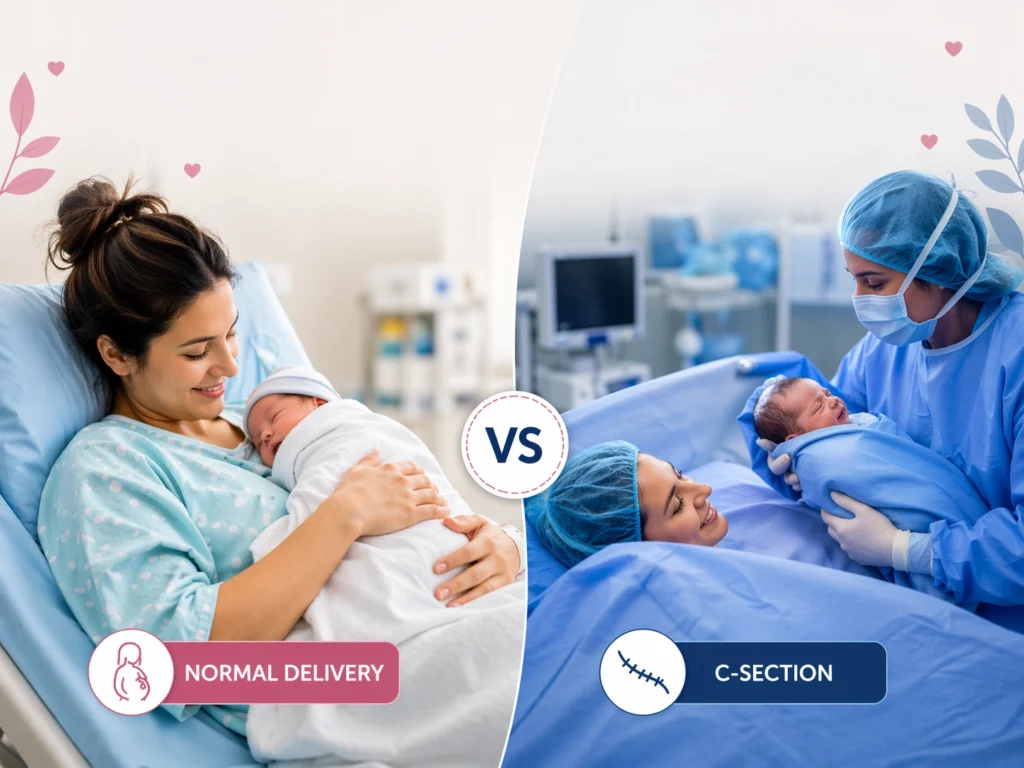
Normal Delivery vs C-Section: What Is Safer for You? Introduction: Pregnancy transforms a woman’s life entirely because expectant mothers must select between vaginal birth and Caesarean section as their delivery method. Medical professionals must evaluate both delivery options because both methods maintain safety through correct execution, yet medical practitioners should determine which method works best according to each patient’s unique health requirements and obstetric situations. The team at Dr Supriya Mahajan’s provides professional expertise which enables you to select your optimal choice through their tailored decision-making process. What Is Normal Delivery? Normal delivery is the natural process of childbirth where the baby is delivered through the birth canal without surgical intervention. Healthy pregnancies that experience no medical issues should proceed with this delivery method according to medical guidelines. Benefits of Normal Delivery: The mother experiences a faster recovery process.  The procedure results in reduced surgical complications for patients.  The patient needs a shorter period in the medical facility.  The mother and baby can start breastfeeding immediately after birth.  Newborns show decreased respiratory problems because of this procedure.  Normal delivery requires women to endure labour pains, which sometimes lead to tears or require delivery assistance through medical procedures. What Is a C-Section? A Caesarean section is a surgical procedure which requires doctors to deliver a baby through an incision they create in the mother’s abdomen and uterus. The procedure can be scheduled before the delivery date, or it can be executed as a medical emergency. When Is a C-Section Recommended? High-risk pregnancies The baby is positioned in a breech, which is an abnormal way to position himself. The placenta covers the cervix in a condition known as placenta previa. The mother is carrying multiple babies who are twins or more. Foetal distress occurs during labour. The mother has already delivered her baby through a C-section. Advantages of C-Section The medical team can plan and schedule the delivery. The procedure decreases the possibility of issues that arise during complex medical situations. The procedure eliminates extended labour discomfort. Disadvantages of C-Section Patients need more time to recover from their surgical procedure. The procedure creates a higher possibility that patients will experience both infections and other medical complications. The procedure results in extra time spent in the hospital, which leads to higher medical expenses. In certain situations, breastfeeding starts later than usual.  Which Is Safer? For low-risk pregnancies, normal delivery is usually considered safer due to fewer complications and quicker recovery. A C-section becomes the safest medical choice when patients experience specific health problems. Key Factors That Determine Safety: The complete health status of the mother The position and health status of the baby The existing medical complications of the pregnancy The complete medical background of the patient Conclusion  The delivery method needs to deliver a healthy outcome for both mother and baby. The decision-making process should begin with trust in your doctor while selecting the safest option to handle your unique circumstances. Regular prenatal visits paired with open discussions with doctors are the key to a healthy delivery. The clinic of Dr Supriya Mahajan offers not only medical skills but also services customised to the needs of the patients, protecting at the same time the highest levels of safety and comfort of the patients. Normal Delivery vs C-Section: What Is Safer for You?

Normal Delivery vs C-Section: What Is Safer for You? Read More »

When Should You Consider IVF? Signs You Should Not Ignore

When Should You Consider IVF? Signs You Should Not Ignore Introduction: Many couples see starting a family as their most beautiful dream, but some couples need to navigate difficult challenges during their family-building journey. Natural conception works for many people, but some people need medical help to overcome their reproductive difficulties. The medical procedure In Vitro Fertilization (IVF) serves as an effective treatment method for these particular situations. People need to understand the appropriate time for considering IVF because this knowledge enables them to seek help at the right moment, which leads to better treatment results. What is IVF? IVF is an advanced fertility treatment where an egg is fertilized with sperm outside the body in a laboratory. The resulting embryo is then transferred into the uterus. The medical procedure receives standard recommendations after all other fertility treatments have failed or when particular health conditions exist. Signs You Should Not Ignore The early signs of infertility need to be identified because they allow you to start appropriate treatment at the right times. The following indicators serve as crucial elements of evidence. 1. Trying to Conceive Without Success Women under 35 need to try to get pregnant for more than 12 months. Women over 35 need to try to get pregnant for more than 6 months. The fertility specialist should be consulted because IVF needs to be considered as an available solution. 2. Irregular or Absent Menstrual Cycles Ovulation problems can be detected through irregular menstrual periods. The fertility problems associated with PCOS (Polycystic Ovary Syndrome) require IVF and other assisted reproductive techniques for treatment. 3. Blocked or Damaged Fallopian Tubes The fallopian tubes serve as essential pathways for natural conception to take place. When infections or surgeries cause blockages or damage to the fallopian tubes, IVF uses external fertilization methods to solve this problem. 4. Male Infertility Issues Low sperm count and poor sperm motility as well as abnormal sperm shape create challenges for natural conception. IVF with ICSI (Intracytoplasmic Sperm Injection) will increase the fertilization success rates. 5. Advanced Maternal Age The quality and quantity of eggs in women undergo a decline as they grow older. Women over 35 face greater difficulties with natural conception, which makes IVF the recommended method because it offers better success rates. 6. Recurrent Miscarriages Experiencing multiple miscarriages can be emotionally and physically challenging. The combination of IVF and genetic testing enables the identification and selection of healthy embryo candidates. 7. Unexplained Infertility The test results show normal results, but conception does not happen. IVF provides a systematic and organized method that increases the likelihood of achieving pregnancy. Benefits of Considering IVF Early  The procedure raises success rates for achieving pregnancy.  The procedure helps discover hidden fertility problems. The service provides multiple treatment methods which include embryo freezing and genetic testing.  Conclusion  Infertility presents overwhelming challenges, yet couples worldwide find relief through IVF treatment, which has assisted millions of couples since its introduction. Early warning signs need immediate medical evaluation because they lead to better health outcomes. You must consult a fertility specialist when you experience difficulties in conceiving because they will help you understand your treatment options. Your first step today will help you achieve your parenthood dream. When Should You Consider IVF? Signs You Should Not Ignore

When Should You Consider IVF? Signs You Should Not Ignore Read More »

High Blood Pressure in Pregnancy: Causes, Symptoms & Treatment

Introduction: The beautiful journey of pregnancy results in various bodily changes which women must experience. High blood pressure which doctors call hypertension requires special monitoring throughout pregnancy. When not managed properly the condition affects both the mother and her unborn child. By knowing the causes and symptoms and treatment methods expecting mothers can protect their health and safety throughout their pregnancy.  What is High Blood Pressure in Pregnancy? High blood pressure in pregnancy occurs when the force of blood against the artery walls becomes too high. During pregnancy people experience hormonal and physical changes which lead to conditions that cause their blood pressure to exceed normal safe levels.  Doctors usually diagnose high blood pressure when readings reach 140/90 mmHg or higher. The condition requires constant medical monitoring because it develops during pregnancy. Common Causes of High Blood Pressure During Pregnancy Common causes include: First-time pregnancy Family history of high blood pressure Obesity or excessive weight gain during pregnancy Carrying twins or multiple babies Pre-existing medical conditions such as diabetes or kidney disease Age over 35 years Types of High Blood Pressure in Pregnancy Pregnant women experience various types of high blood pressure which medical professionals need to understand for effective treatment development. 1. Gestational Hypertension The condition starts after 20 weeks of pregnancy and usually disappears after the woman gives birth. The condition needs medical observation because it has the potential to develop into serious health complications. 2. Chronic Hypertension This type occurs when a woman already has high blood pressure before pregnancy or before 20 weeks of pregnancy. Symptoms of High Blood Pressure in Pregnancy High blood pressure often does not produce any visible symptoms for most people. The need for regular prenatal checkups exists because of this situation. Some women will develop warning signs however. Possible symptoms include: Severe or persistent headaches Swelling in the face, hands, or feet Blurred vision or sensitivity to light Shortness of breath Nausea or vomiting Risks Associated with High Blood Pressure The medical condition of untreated hypertension during pregnancy creates multiple health risks that affect both the mother and her unborn child. Potential risks include: The placenta experiences decreased blood circulation The delivery of the baby occurs before the standard birth date The baby is born with a weight that falls below the normal range The placenta detaches from its normal position Treatment and Management The medical treatment of high blood pressure during pregnancy requires assessment of both the pregnancy stage and the hypertension severity. Doctors focus on protecting both the mother and the baby. Common treatment approaches include: The patient receives ongoing blood pressure assessments The patient receives medication that meets safety standards for use during pregnancy The patient attends scheduled prenatal health check-ups The patient requires sufficient time for recovery while learning to handle stress Conclusion High blood pressure during pregnancy is a condition that should never be ignored. With early detection, proper treatment, and regular prenatal care, most women can manage it successfully and deliver healthy babies. Our website provides experienced professionals who will help you if you show symptoms or need guidance about your pregnancy. We help ensure a safer and healthier pregnancy journey.

High Blood Pressure in Pregnancy: Causes, Symptoms & Treatment Read More »

10 Warning Signs During Pregnancy You Should Never Ignore

Introduction: The process of pregnancy will bring about significant changes to your life, which requires you to maintain medical care. The majority of pregnancy symptoms occur as standard bodily functions, yet there exist specific symptoms which must always be treated as potential medical emergencies since they can lead to severe health threats for both mothers and their newborns. Should these signs be noticed early, then immediate medical intervention lessens the risks and fosters a healthy gestation. The experienced gynecologists at Dr. Supriya Mahajan’s clinic provide essential services that help women receive proper medical treatment throughout their pregnancy period. 1. Severe Abdominal Pain Severe or persistent abdominal pain during pregnancy may indicate ectopic pregnancy, placental issues, or miscarriage. The patient needs to go to the hospital when their health problems become more severe. 2. Heavy Vaginal Bleeding The occurrence of heavy vaginal bleeding during pregnancy proves to be abnormal because this condition indicates that the woman is at risk of losing her pregnancy or experiencing placental problems. The mother and baby need emergency medical care. 3. Persistent Headache with Blurred Vision The combination of severe headache with light sensitivity and blurred vision requires emergency medical evaluation because it may indicate preeclampsia. 4. Sudden Swelling of Face, Hands, or Feet Pregnant women typically experience foot swelling as a common side effect of their condition. Preeclampsia causes sudden or excessive swelling which needs immediate medical assessment. 5. Reduced Baby Movements Between their second trimester and birth babies establish their typical movement patterns. Medical evaluation becomes necessary when fetal movement shows complete absence or major decline because this condition indicates distress.  6. High Fever A fever during pregnancy which reaches 101°F (38.3°C) or higher indicates that an infection exists in the body. The developing baby faces danger from certain infections which require immediate medical care. 7. Persistent Vomiting in Pregnancy The medical condition hyperemesis gravidarum shows severe vomiting which leads to dehydration and needs immediate medical treatment during pregnancy. 8. Burning or Painful Urination The combination of pain and burning sensations together with urination difficulties during pregnancy indicates a need for treatment of a urinary tract infection. The occurrence of urinary tract infections during pregnancy requires immediate medical treatment because it helps prevent further medical problems. 9. Severe Dizziness or Fainting People experience occasional dizziness because of their hormonal changes. The body experiences frequent dizziness together with fainting and weakness as symptoms of anemia or dehydration or blood pressure problems. 10. Sudden Fluid Leakage If you notice a sudden gush or continuous leakage of fluid from the vagina, it may mean your water has broken prematurely. To prevent more health problems due to infection, immediate medical treatment is required.   Conclusion  Pregnant women must learn to identify warning signs because it protects both their safety and that of their unborn child. The process of finding medical problems at an early stage leads to better outcomes through prompt medical treatment. People need to contact a reliable gynecologist when they notice any unusual symptoms. Staying informative, attending regular prenatal appointments will make your pregnancy experience more safe and healthier.

10 Warning Signs During Pregnancy You Should Never Ignore Read More »

Female hands holding a flower in delicate way

Vaginal Health: Myths and Facts Every Woman Should Know

Introduction- Let’s be honest. We treat it like a secret. We whisper. We use code names. We feel awkward just saying the word. But this silence is dangerous. Ignoring your Vaginal Health doesn’t make it go away.  It just leaves you confused and worried. So, let’s clear the air right now. Here is the truth. Your vagina is an engineering marvel. Think of it like a high-tech, self-cleaning oven. It balances its own chemistry. It sweeps out bacteria. It doesn’t need fancy perfumes or expensive washes. In fact, those things often ruin the magic. I’m Dr Supriya Mahajan, practising as a Gynecologist in Thane. I want to break this taboo. I want to replace the myths with medical facts.  No judgment. No blushing. Just honest, helpful advice for every woman in Thane. Let’s get started. 2. What is “Good” Vaginal Health? (The Science) The Secret Sauce: Understanding pH Balance and the Microbiome So, what defines good Vaginal Health? It is not about looks. It is remarkably invisible. It is all about balance. Specifically, a chemical balance. We call this “pH.” Your vagina is naturally acidic.  Think of lemon juice. This acidity is vital. Why? Because it kills bad germs. Also, you have an army. An army of “good” bacteria.  They are called Lactobacilli. They are your body’s guards. They fight off invaders. So, a healthy vagina…is a balanced ecosystem. However, this balance is fragile.  Stress can tip it. Antibiotics can change it. Even your period affects it. If this acid level drops…the bad germs win. That is when infections start. 3. Why Hygiene Matters: It’s Not About Smelling Like Flowers Now, let’s talk about hygiene. Why does it matter? Please, listen closely. It is not about perfume. You are not a bouquet. You shouldn’t smell like roses.  Commercial ads lie to you. Real hygiene is purely medical. It is about prevention. It stops the nasty stuff. Like Bacterial Vaginosis (BV). Or itchy Yeast infections. Or painful Urinary Tract Infections (UTIs).  Proper care keeps the “guards” happy. It keeps the environment stable. But wrong habits hurt them. Like scrubbing too hard. Or using scented soaps.  This destroys your natural protection. It strips away the good bacteria. So, the goal is simple. The goal is health. Not a fake, floral scent. 4. The “Red Flags”: Warning Signs You Should Never Ignore Change in Color or Odor of Discharge Your discharge tells a story. It acts like a messenger. Usually, it is clear. Or maybe cloudy white. This is healthy. But watch for changes.  Is it turning green? Or maybe a dull grey? That is a warning sign. Also, check the smell. A mild scent is normal. However, a strong odour? Specifically, a “fishy” smell? That is a major red flag.  It usually screams “infection.” Likely Bacterial Vaginosis. This disrupts your Vaginal Health. So, pay close attention. Do not ignore these clues. Your body is talking. Itching, Burning, or Swelling Next, let’s talk feelings. Does it itch? I mean, really itch? Does it burn? Especially when you pee? Is the area swollen? Or looking bright red?  These are not normal. It feels like a fire. Or a constant mosquito bite. This is your body shouting. It might be yeast. Or perhaps an allergy.  Maybe from a new soap. Either way, it needs help. Good Vaginal Health feels calm. It shouldn’t distract you. So, seek relief fast. Bleeding Between Periods or After Sex Now, let’s discuss blood. Periods are messy enough. But, bleeding between them? That is different. Or bleeding after sex? That is a major sign.  We call it “spotting.” Sometimes, it is hormonal. But often, it is physical. It could be a polyp. Or a cervical issue. Or an infection.  It is definitely a red flag. Therefore, do not wait. Please, come see your Gynaecologist. We need to check this. It protects your future health. Key Takeaway: Pain is Not Normal Here is the bottom line. Pain is a signal. It is an alarm bell. Sex should not hurt. Walking should not hurt. Sitting should not hurt.  If it hurts, stop. Listen to your body. Do not just “tough it out.” That is dangerous. Protecting your Vaginal Health means acting. It means seeking answers.  You deserve comfort. You deserve to feel good. Pain is never “okay.” 5. Myth vs. Fact: Busting the Biggest Misconceptions in Vaginal Health Myth 1: Frequency of washing makes you cleaner. Fact: Over-washing kills good bacteria. Let’s tackle the first myth. Many women believe this. “More washing is better.” “Cleanliness equals health.”  That is absolutely false. Actually, it harms Vaginal Health.  Why? Remember the good bacteria? Over-washing kills them. It strips the protective oils. It leaves you dry. And prone to infection.  So, stop scrubbing. Once a day is enough. Truly. Just use water. Less is actually more. Your body knows best. Myth 2: Every smell is an infection. Fact: Vaginas have a natural scent; it changes with your cycle. Myth number two. “I smell something.” “It must be an infection.” No. That is wrong.  Your vagina has a scent. A natural, musky scent. It is not odourless. It changes, too. Like during your period. Or after the gym.  That is totally normal. However, a fishy smell? That is different. But a mild scent? That is just you. It is healthy. Don’t stress about it. Myth 3: You need special products/washes for Vaginal Health. Fact: Warm water is best; avoid “feminine hygiene” sprays. You see them in stores. “Feminine Hygiene Washes.” “Vaginal Sprays.” They promise freshness. But, here is the truth. They are unnecessary. In fact, they are harmful.  They are full of chemicals. These chemicals irritate the skin. They mess up the pH. So, what should you use?  Just warm water. That is it. Simple warm water. It is the best cleanser. Save your money. Myth 4: The hymen indicates virginity. Fact: It’s just tissue; it can break from sports or tampons. This is a big one. Especially here in India. The “Virginity Myth.” People think

Vaginal Health: Myths and Facts Every Woman Should Know Read More »

Fibroid removed by Laparoscopic Myomectomy

Laparoscopic Myomectomy: The “Keyhole” Solution to Fibroids

Introduction: Heavy periods. Debilitating pain. Worrying about your fertility. Uterine fibroids are a heavy burden. And the thought of surgery? It’s terrifying. You imagine a huge cut. You picture a long, painful recovery. So, you feel stuck. You want relief. But you fear the solution. What if there was a better way? A true game-changer? There is. It’s called Laparoscopic Myomectomy. This is advanced, minimally invasive fibroid removal. I’m Dr Supriya Mahajan, a specialist in this exact laparoscopic surgery in Thane. Women get their lives back without the large scar. Let’s talk about it. Section 1: What Are Fibroids? So, let’s start at the beginning. This surgery treats uterine fibroids. What are they? They are non-cancerous growths. They grow in or on the uterus. Think of them as unwanted guests. Guests who are causing problems. What kind of problems? Heavy, painful periods. The kind that ruins your plans. Also, pelvic pain. A constant, dragging feeling. And for many, infertility. Or even repeated miscarriages. These fibroids can be tiny. Or they can be very large. They are a very real problem. And they are extremely common. The Goal: What is a “Myomectomy”? So, what is a “myomectomy”? It is a beautiful, precise surgery. Here is the core concept. The goal is fibroid removal only. That’s it. We take out the “unwanted guests.” But we leave the “house.” Your uterus stays intact. It remains healthy. This is the most important part. This is not a hysterectomy. A hysterectomy removes the entire uterus. A myomectomy does not. Therefore, this is a fertility-sparing surgery. It is the solution…for women who want relief…and also want the option of pregnancy. It is about giving you back control.   Section 2: The 3 Paths to Fibroid Removal  So, how do we get these fibroids out? It is not one-size-fits-all. The right path depends on your fibroids. Where are they? How big are they? How many are there? We have three main approaches. Let’s compare them. Abdominal Myomectomy (The “Traditional” Path): This is the “classic” open surgery. It is a very effective operation. Here, we make one large incision. Think of a C-section cut. Through this cut, we access the uterus. And we remove the fibroids. We use this path for very large fibroids. Or when there are many fibroids. It gets the job done. But it is major surgery. So, the recovery is longer. The hospital stay is longer. And the scar is larger. It is the most invasive option. Hysteroscopic Myomectomy (The “No-Cut” Path): Now, this path is totally different. It’s called Hysteroscopic Myomectomy. With this method, there are no cuts on your belly. At all. Instead, we work through your vagina. We pass a very thin tool… …called a hysteroscope… …through your cervix. And directly inside your uterus. This tool has a tiny camera. It lets us see the fibroid. Then, we use it to shave the fibroid away. The recovery is incredibly fast. But, there is a catch. This only works for specific fibroids. The ones inside the uterine cavity (submucosal). Laparoscopic Myomectomy (The “Keyhole” Path): And this brings us to the “keyhole” path. This is Laparoscopic Myomectomy. This is the advanced, modern approach. And it is my speciality here in Thane. Here, we make tiny incisions. Just a few small cuts. (Often less than one centimetre each!) We pass a tiny high-definition camera… …and specialised, long, thin tools… …through these keyholes. We then remove the fibroids carefully. This method is a true game-changer. It is minimally invasive. It is precise. And the benefits are huge. Section 3: The Spotlight: Why Choose Laparoscopic Myomectomy? So, why choose this path? This is the most important part. The benefits for you, the patient, are huge. First: Less Pain. A lot less pain. Tiny cuts simply hurt less than a big one. Second: Minimal Scarring. You avoid one large, horizontal scar. Instead, you have a few tiny marks. These fade very quickly. Third: Faster Recovery. This is the true game-changer. You heal in days, not weeks. You get back to your life. Back to your job in Thane. Back to your family. Fourth: Shorter Hospital Stay. You often go home the same day. Or the very next day. Finally: Less Blood Loss. The procedure is just so precise. Who is the Ideal Candidate for This Surgery? Now, is this path right for everyone? It is an amazing option. But it depends on your fibroids. Specifically, their location. Remember the “no-cut” hysteroscopy? That path is for fibroids inside the womb. This “keyhole” path is different. It is perfect for fibroids that are on the outside of the uterus. (We call these “subserosal.”) And for fibroids…that are within the muscle wall. (We call these “intramural.”) The size and number also matter. This is why you need an expert consultation. We must “map” your fibroids. Then, we choose the safest, best path for you. This is my expertise in Laparoscopic Myomectomy in Thane. Section 4: How Long Does Laparoscopic Myomectomy Surgery Take? This is a very common question. So, how long is the surgery? The truth is, it varies. It is not a set time. It completely depends on your fibroids. How many fibroids do you have? How big are they? And where are they located? A simple procedure might take an hour. Or maybe two. A very complex case… …with many large fibroids… …might take three or four hours. This is not a race. Goal is precision & safety. Your Gynaecologist focuses on careful removal. And, most importantly, on perfect stitching. This ensures your uterus is strong. That takes time. The Recovery Timeline: Getting Back to Your Life This is the best part. This is the “keyhole” advantage. Your recovery is fast. It is not like traditional surgery. So, here is a realistic timeline. First, your hospital stay. It is very short. You will likely go home, perhaps the next day. That’s it. Now, what about getting back to life? You will be walking around quickly. What about

Laparoscopic Myomectomy: The “Keyhole” Solution to Fibroids Read More »

A adolescent girl is in pain during her periods

Mom, Is This Normal?- Adolescent Gynaecological Problems

Introduction: It’s the whisper you’ve been waiting for. Or maybe it’s just a locked bedroom door. An awkward silence at the dinner table. You see your adolescent daughter. She’s growing up. And you have questions. She does too.   Let’s be honest. This stuff is… awkward. Talking about periods is weird. Talking about our bodies can feel strange. It feels so much easier to just stay quiet.   But I’m here to tell you, let’s talk. I’m Dr. Supriya Mahajan. For 18 years, I’ve been a gynaecologist right here in Thane. I’ve sat with so many families, just like yours. I’ve heard every question you can imagine. (Trust me, none of them are “weird”.)   Let’s get started.   Section 1: The First Visit to the Gynaecologist Why Visit a Gynaecologist at a Young Age? Let’s clear up a big myth. The gynae isn’t just for problems. It’s not just for pregnancy. So, why come in young?   It’s about trust. It’s about building a relationship. I want to be your adolescent daughter’s health partner. A safe person, she can ask anything. This isn’t about being sick. This is about staying healthy. It’s about starting a positive journey.   We build this trust now. We build it together. This way, she always has a health advocate. For her entire life.   That’s why it’s so important.   When Should an Adolescent’s First Visit? So, what’s the magic number?   There isn’t one. But I have a clear guideline. I recommend a first “hello visit” soon. Usually, this is between the ages of 13 and 15. This visit is just a conversation.   However, we should talk sooner if……she is having any problems. Like severe period pain. Or very heavy bleeding. (We’ll talk more about those later.) And, you must bring her in……if she becomes sexually active. That is not optional. Her health is the top priority. We need to talk right away.   What Actually Happens at an Adolescent‘s First Visit? This is the big one. The part everyone fears. Moms. Daughters. Everyone.   You are thinking about the “exam.”The stirrups. The speculum. So, I want you to take a deep breath. And relax because the first visit is just a talk. That’s it.   I promise. There is almost never an internal exam. No pelvic exam. No stirrups. The Gynaecologist will talk to her. She will ask about her period. Her health. Her questions. We might check her height.   Her weight. Her blood pressure. It’s a conversation. Our goal is one thing. To build trust. I want her to feel safe. That’s all.   Section 2: “Is This Normal?” Guide to Periods Is it Normal to Have Menstrual Cramps in adolescence? Yes. The short answer is yes. Cramps are incredibly normal. Most girls and women get them. But why do they happen?    Think of your uterus. It is a very strong muscle. During your period, it has a job. It must squeeze. It squeezes to help shed its lining. That squeeze is what you feel as a cramp.    A body chemical starts this. It’s called prostaglandin. More of this chemical…can mean stronger cramps. So, feeling some discomfort? Some aching? Some squeezing? That is usually very normal. It’s just your body doing its work.   How to Prevent and Manage Menstrual Cramps in Adolescence? Okay, so cramps are normal. But they still hurt. So, what can you do? You have great, simple options.   First, use heat. A hot water bag is your best friend. Heat relaxes that squeezing muscle. It feels so good.    Next, move your body. I know. You don’t want to. But gentle walking helps. Light stretching helps. It brings blood flow. Also, drink water. Lots of water. Hydration can ease cramps.   If the pain is still too much…a safe pain reliever is okay. We can discuss what works best.   But… When Is It NOT Normal?    This is the crucial part. Pay attention. Some pain is normal. Debilitating pain is not. Is your daughter missing school? Is she lying in bed, unable to move? Is she vomiting from the pain? Does basic pain relief do nothing?    This is not “just a bad period.” This is not “part of being a girl.”    This is a signal. It’s her body shouting for help. If this is happening, you need to see Gynecologist. We need to investigate. Please, do not ignore this pain. How to Maintain Menstrual Hygiene in adolescence? This part is simple. And it is so important. It’s all about staying clean. And preventing infections.    First, change your pad or tampon. Change it often. A good rule is every 4 to 6 hours. If your period is heavy, change it more.   Why? Because old blood can attract bacteria. This can cause infections. And it can cause odours.    Next, how to wash. Use plain, warm water. Only wash the outside parts. (That is called the vulva). And always, always wipe front to back. This is the golden rule. It stops germs from spreading.    Now, the biggest “DON’T.” No soap inside. And NO douching. Ever. Your vagina is a self-cleaning organ. It is amazing. It has good bacteria to protect it.   Douching kills them. It messes up the balance. It causes infections. So, just water. Just the outside. That’s it. You are clean. You are healthy.   Section 3: Common Adolescent Problems (And When to Seek Help) Is it Normal to Have White Discharge? Yes. Absolutely. White discharge is normal. In fact, it is healthy.   So, what is it? Think of it as your body’s “housekeeping.” It’s your vagina’s self-cleaning system. It is amazing. It naturally washes away old cells. And it keeps everything healthy.   So, a little clear or white discharge…is actually a good sign.    But… when should you worry? You need to watch for changes. Is the colour different? Like, yellow? Or green? Or grey? Does it have a strong, fishy smell?

Mom, Is This Normal?- Adolescent Gynaecological Problems Read More »

Call Now Button