Dr. Supriya Mahajan

Dr Supriya Mahajan

Egg Freezing: What Women in Their 20s and 30s Should Know

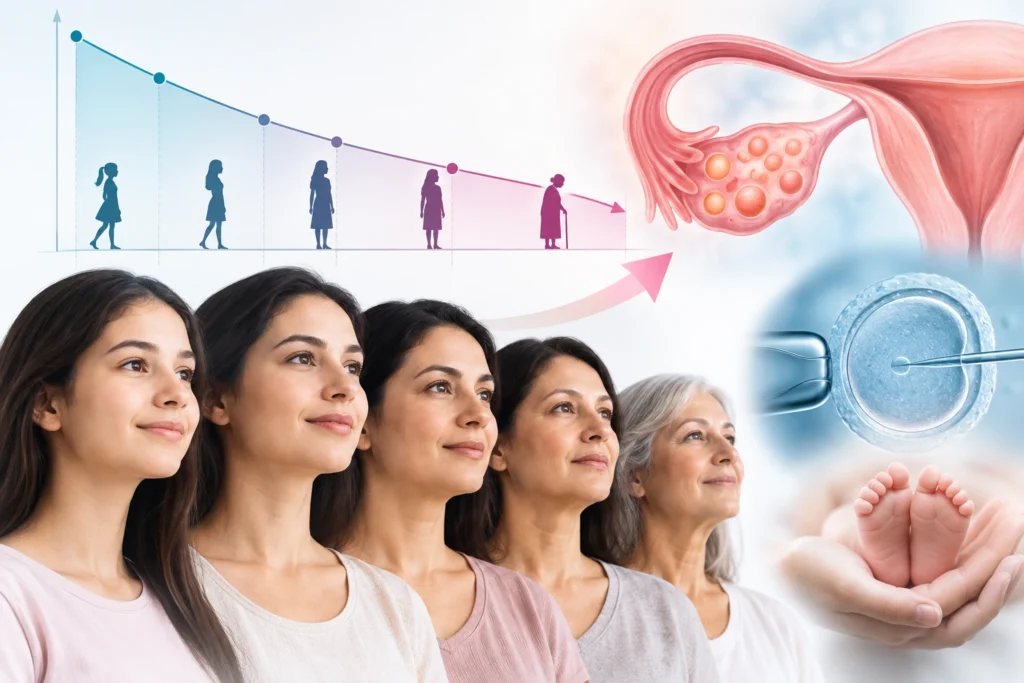
Egg Freezing: What Women in Their 20s and 30s Should Know Many women feel it is important to get pregnant for the future. But plans for careers and relationships, as well as education commitments to finances or individual choices, can cause them to postpone pregnancy. Egg freezing, sometimes referred to as cryopreservation for oocytes, may be the possibility of preserving eggs in case of need. Egg freezing is the process of removing mature eggs from the ovaries and freezing them for later use in IVF. But it’s important to remember that egg freezing doesn’t mean you will get pregnant later on. The age at which you freeze and the number of eggs you freeze may influence the success of your future eggs. Why Does Age Matter for Egg Freezing? Female fertility naturally alters as we age. The decline in fertility begins around the beginning of the 30s. It decreases quicker after mid-life. The quantity and the quality of eggs drop with time. Egg Freezing in Your 20s In general, women who are in their 20s possess more healthy eggs. The freezing of eggs in this age can offer more options for reproduction after. But freezing eggs isn’t a requirement for women who are in their 20s. It is a decision that should be based on the individual’s circumstances, future baby strategies, health history and individual preference. Egg Freezing in Your 30s The freezing of eggs can be considered in the 30s. The quantity of eggs as well as the quality decreases with age. It is therefore increasingly important, specifically in the case of women who are in their late 30s to mid-30s. Women should not think of freezing eggs as an insurance plan. The process can help preserve reproductive choices, but it can’t slow the effects of ageing or ensure the birth of a child in the future. What Does the Egg-Freezing Process Involve? The method usually comprises various stages: Initial consult: A fertility expert discusses medical history as well as fertility goals. Varian stimulation: Medicines can be used to stimulate the ovaries to produce numerous mature eggs. Egg extraction: The eggs mature are taken via an operation that is medical. Freezing: The appropriate mature eggs are frozen and saved for possible IVF treatments. Is Egg Freezing Right for You? There’s no one condition or age that allows egg freezing for everybody. The medical history, the ovarian reserve and age, as well as future family plans and the financial implications, should be addressed with a doctor. Egg freezing can also be often used by women whose medical treatments could affect their future fertility. Talk to a Fertility Specialist If you’re thinking about freezing your eggs during your 30s or 20s, receiving a personalized medical diagnosis is the first thing to do. Dr. Supriya Mahajan, Thane Obstetrician and Gynaecologist, is a fertility expert providing treatment and customized women’s health care. A fertility consultation can help you understand what the options are, what the expected outcomes might be, the potential risks and how freezing eggs fits into your fertility plans. Egg freezing is a fertility preservation option and does not guarantee future pregnancy. A well-thought-out choice early on will allow you to think about your future reproductive plans with more confidence and certainty. Irregular Periods: When Should You See a Gynaecologist?

Egg Freezing: What Women in Their 20s and 30s Should Know Read More »
How Do AMH Levels by Age Chart Impact Fertility and IVF Success?

How Do AMH Levels by Age Chart Impact Fertility and IVF Success? Anti-Mullerian Hormone (AMH) is a key indicator used to determine the ovarian reserve of women. It is made by tiny fertile follicles inside the ovaries. They will provide an estimate of the amount of eggs left. An AMH levels chart by age can help doctors determine if a woman’s AMH levels are within the normal range given her age. But AMH shouldn’t be considered a reliable indicator of fertility. Egg quality and ovulation health, fertility, sperm health and fallopian tube health, along with overall fertility health, impact the chance of getting pregnant. Understanding AMH Levels by Age AMH levels tend to decrease with age as ovarian reserve decreases naturally as we age. Women who are in their early 20s generally have higher AMH levels. Women older than 30 and 40 may be lower in levels. An AMH level chart by age can give specific age-related context. But there isn’t one AMH value that can guarantee fertility or infertility. AMH: A higher AMH could indicate a greater number of ovarian follicles remaining. Low AMH could be a sign of diminished ovarian reserve. High AMH may be linked with conditions like polycystic ovarian syndrome (PCOS). How AMH Affects Natural Fertility AMH is a measure of egg quantity and not egg quality. This distinction is crucial when it comes to fertility. Low AMH level doesn’t necessarily indicate that natural pregnancy isn’t possible. Equally, an average or high AMH level is not a guarantee of pregnancy. Dr Supriya Mahajan can help evaluate AMH results along with age, ovulation, egg quality, and other fertility factors to understand your individual fertility potential. Age remains among the main factors that impact eggs’ quality. As women get older, the amount of eggs shrinks, and the percentage of eggs that have chromosomal anomalies tends to rise. AMH and IVF Success AMH can be extremely useful when planning IVF (IVF). Doctors utilise AMH levels to assess how the eggs respond to fertility drugs in IVF.  Women who have more AMH might produce more eggs following the stimulation of the ovary. Women who have lower AMH could produce fewer eggs. But AMH is not able to directly determine the likelihood that the IVF cycle will produce the birth of a child. Age of the woman, her embryo quality, sperm characteristics, uterine health, and various other medical conditions can affect IVF results. What If Your AMH Is Low? An abnormal AMH result may be worrying; however, it should not be taken as a whole. Certain women who have low AMH are able to conceive naturally or experience success with IVF treatment. If you notice your AMH levels are lower than you’d anticipate at your age, Dr Supriya Mahajan may recommend a detailed fertility assessment along with other tests, such as an ultrasound to assess antral follicle count and additional hormone tests. The test could involve the use of ultrasound to measure the number of follicles that are present located in your antral area and different tests to determine hormone levels. Final Thoughts AMH results based on age charts could provide important details about the reserve of ovaries and help doctors plan treatments to improve the development of fertility. However, AMH is only one element of the fertility calculation. The eggs’ quality, fertility, health of the reproductive system, age, and relationships to your spouse are all crucial factors. If you’re worried about the health of your AMH or are considering IVF, discuss it with a fertility expert to get a customized assessment and treatment regimen. If you’re concerned about your AMH levels or are considering IVF, Dr Supriya Mahajan can help you understand your results and recommend a personalized fertility evaluation and treatment plan based on your age, ovarian reserve, and overall reproductive health. Irregular Periods: When Should You See a Gynaecologist?

How Do AMH Levels by Age Chart Impact Fertility and IVF Success? Read More »

Importance of Weight Control in PCOD: How Healthy Weight Management Improves Hormonal Balance

Importance of Weight Control in PCOD: How Healthy Weight Management Improves Hormonal Balance Polycystic Ovary Syndrome (PCOS), also known as PCOD, is a condition that affects hormone levels and thus can impact menstrual cycles, ovulation, metabolic function, and hair and skin health and leads to fertility problems. The control of weight and the management of excess weight gain are particularly crucial for obese women with PCOD. Weight loss isn’t the ultimate goal of PCOD care; the main goal of PCOD care is to achieve better metabolic and hormonal health through sustainable lifestyle changes. How Weight Changes Hormonal Balance in PCOD In PCOD, the pancreas produces a lot of insulin to keep the blood sugar level in check. As the cells in the body stop recognizing and reacting to insulin, production of insulin is increased and is therefore a leading cause of PCOD. Higher insulin levels drive ovarian hormone production and cause PCOD. Abdominal obesity further worsens metabolic health. In PCOS, the main recommendation is for lifestyle changes for the improvement of central obesity and blood lipid levels. Will Weight Loss Improve Symptoms of PCOD? Losing weight, especially for women who are overweight, always has an improvement on health status. It was previously recommended that 5 to 10% weight loss can have significant positive effects on the symptoms of the condition. Healthy weight management supports: Improvement in insulin sensitivity. Improvement in menstrual cycle regularity. Optimization of various metabolic and lifestyle indicators. In some women, improvement in ovulation. Decreased risks on various complications related to obesity. Improvement in general well being. Results may vary from person to person. Weight loss should not be considered a cure for all difficulties associated with PCOD. Benefits of healthy eating and exercise are appreciated by women of all body weights with PCOD. Healthy Ways to Manage Weight with PCOD Currently, no particular diet has been found to be the best for all women with PCOD. It is recommended to follow healthy eating that meets your nutritional needs, doesn’t unnecessarily restrict food, and can be sustained over a longer period. A healthy lifestyle includes: Maintaining regular physical activity. Eating protein-rich food along with whole foods and fibre. Having adequate sleep and maintaining a consistent daily routine. Setting achievable weight goals. Progress assessment without over-reliance on weighing. When Should You Consult a Gynaecologist? Consult a Gynaecologist when there are symptoms of weight gain, absence of periods, facial and body hair growth, acne and other PCOD-related symptoms. Individualized management can be of great help to you. Dr Supriya Mahajan provides care related to obstetrics, gynaecology, and fertility in addition to women’s health in Thane. Conclusion Overweight individuals with PCOD can benefit from effective weight management strategies to help manage the condition. Dr Supriya Mahajan recommends focusing on sensible meal choices, regular physical activity, healthy behavioral changes, and professional guidance to support metabolic and endocrine health. Rather than aiming for rapid weight loss, women with PCOD should focus on developing sustainable healthy habits that improve overall well-being and support hormonal balance. Irregular Periods: When Should You See a Gynaecologist?

Importance of Weight Control in PCOD: How Healthy Weight Management Improves Hormonal Balance Read More »

Endometriosis: Early Symptoms Every Woman Should Know

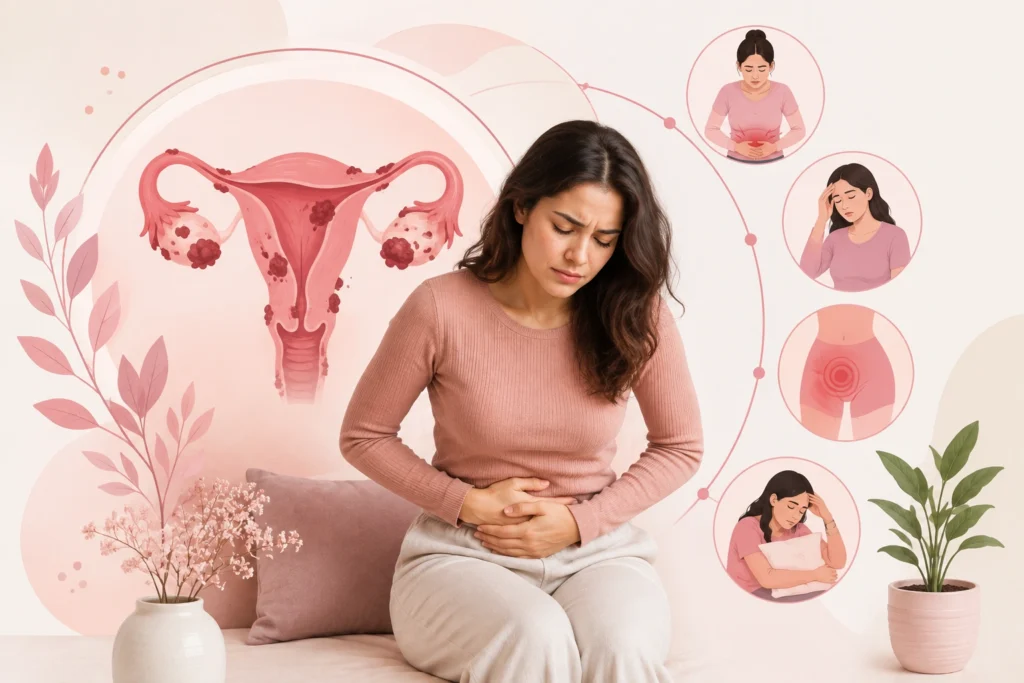
Endometriosis: Early Symptoms Every Woman Should Know Endometriosis is where tissue similar to the lining of the uterus begins to grow outside the uterus. This can affect the ovaries, fallopian tubes, and the lining of the pelvis, causing pain, scarring, and inflammation, and eventually can affect a person’s ability to conceive. The American College of Obstetricians and Gynecologists (ACOG) reports that endometriosis affects about 1 in 10 women in the prime reproductive years. Determining the symptoms of endometriosis can discourage women from trying to manage the ‘normal’ symptoms of menstruation, which can include severe period pain. Severe Period Pain The most well known symptom of endometriosis is debilitating period pain. While menstrual cramps are common and expected, endometriosis pain is debilitating and causes a person to miss work, school, or other normal daily activities. The pain can start before the period and lasts through menstruation. Pelvic or Lower Back Pain Some women experience pain in either or both their pelvis and lower back, which can be both before, during or after their menstruation. Gynecological pain that worsens over time is a sign that a person should see a doctor. Heavy Bleeding The menstruation of an individual with endometriosis can be particularly heavy. If the individual bleeds through their pads or suffers significant disruption to their normal daily activities due to severe bleeding, it is advisable to see a doctor. Pain During or After Sex Pain during and after sex should also be a concern for people suffering from endometriosis. Dyspareunia can be caused by several things, but endometriosis causes deep abdominal pain during sex which should be evaluated by a doctor. Painful Urination or Bowel Movements Endometriosis can lead to pain when urinating or moving your bowels. It can be worse when it occurs during your menstrual cycle. You should go to the gynecologist if you experience this pain regularly. Fatigue Endometriosis can cause women to feel extremely tired and have little energy. This can be caused by chronic pain and inflammation or heavy menstrual bleeding. Difficulty Getting Pregnant Some women find out about endometriosis from their doctors when they try to get pregnant and are unable to do so. The scarring caused by endometriosis can block the fallopian tubes. The American Congress of Obstetricians and Gynecologists (ACOG) mentions that endometriosis is present in many women who have problems conceiving. Going to the Gynecologist If menstrual pain interferes with your daily activities, it is important to consult a doctor. Dr Supriya Mahajan recommends not ignoring persistent or severe period pain, painful intercourse, heavy bleeding, or bowel and bladder symptoms, as these may indicate an underlying condition such as endometriosis. Depending on your symptoms, evaluation may include a pelvic examination, ultrasound, MRI, or, when appropriate, laparoscopy. Some women with endometriosis experience few or no obvious symptoms, which can make diagnosis challenging. If symptoms occur frequently or affect your quality of life, timely evaluation by an experienced gynecologist can help identify the underlying cause and guide appropriate treatment. Irregular Periods: When Should You See a Gynaecologist?

Endometriosis: Early Symptoms Every Woman Should Know Read More »

Irregular Periods: When Should You See a Gynaecologist?

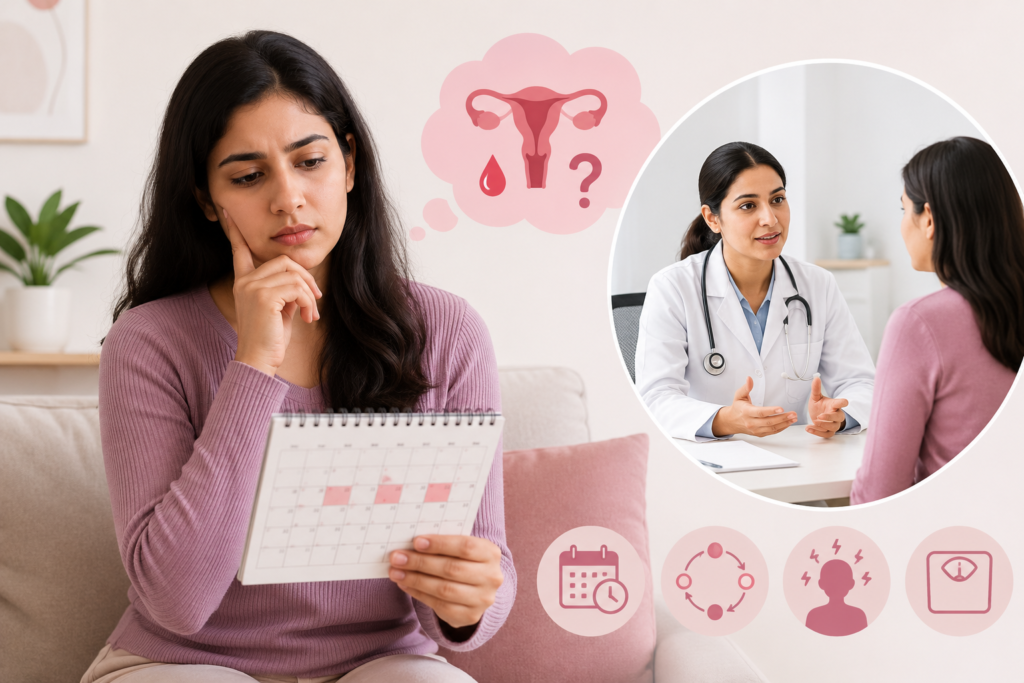
Irregular Periods: When Should You See a Gynaecologist? Introduction: Menstrual cycles are different for each woman. Having a regular period is usually a good sign that your reproductive health is fine. If your cycle changes occasionally, it is usually not a cause for concern, but if it happens a lot or all the time, you should not ignore it. If you have persistent irregular periods, consult a gynaecologist, and they can help discover the cause of the problem and make sure you are treated in time.  What Are Irregular Menstrual Cycles? A normal menstrual cycle occurs every 21 to 35 days and typically lasts between 2 and 7 days. Menstrual cycles are irregular when they do not happen normally. Menstrual cycles are considered irregular when: Your menstrual cycle occurs less than 21 days apart or more than 35 days apart.  Your periods are unusually heavy or unusually light.  Your periods last longer than seven days.  You might see some blood between cycles Your periods stop suddenly without pregnancy. This is not because of pregnancy. Common Causes of Irregular Periods Many things can affect your period, including: Hormonal Imbalances Your period is controlled by hormones. If you have something like polycystic ovary syndrome or thyroid problems or high prolactin levels, this can affect your hormone production and your period. Stress and Lifestyle Factors Stress is a thing that can affect your hormones, whether it is physical stress or emotional stress. If you do not sleep well, exercise too much, have sudden changes in your weight and eat unhealthy foods, these things can also affect your period. Your period can really be affected by stress and lifestyle factors. Polycystic Ovary Syndrome (PCOS) PCOS is a reason for irregular periods. Women with PCOS often experience irregular or missed periods, weight gain, acne, excessive facial or body hair growth, and difficulty conceiving. . Perimenopause As women approach menopause, their periods can change. Irregular bleeding is normal during this time. It’s still a good idea to see a gynaecologist. Uterine Conditions Fibroids, polyps, endometriosis and adenomyosis can cause bleeding and pelvic pain. Treatment Options for Irregular Periods Treatment depends on the underlying cause of irregular periods, which is different for each person, and it depends on what is causing the problem. The doctor may suggest some things to help, such as: Changing your lifestyle like finding ways to deal with stress and maintaining a healthy weight  Taking medicine to help with hormones or using birth control pills Getting treatment for thyroid problems or hormone issues Managing Polycystic Ovary Syndrome (PCOS)  Taking medicine to help with heavy bleeding If you have a treatment plan that’s just for you, it can really help you get your periods back on track and feel better overall. Conclusion If your periods have become irregular or are affecting your daily life, don’t ignore the symptoms. Early diagnosis can help identify hormonal disorders, thyroid conditions, PCOS, or other underlying health issues. Consulting an experienced gynaecologist can help you receive the right diagnosis and personalised treatment for better reproductive health. If you are looking for expert women’s healthcare, Dr Supriya Mahajan provides comprehensive evaluation and personalised treatment for menstrual disorders and a wide range of gynaecological conditions. Schedule a consultation to receive timely care and protect your reproductive health. Irregular Periods: When Should You See a Gynaecologist?

Irregular Periods: When Should You See a Gynaecologist? Read More »

Laparoscopic Ovarian Cyst Removal: Benefits and Recovery

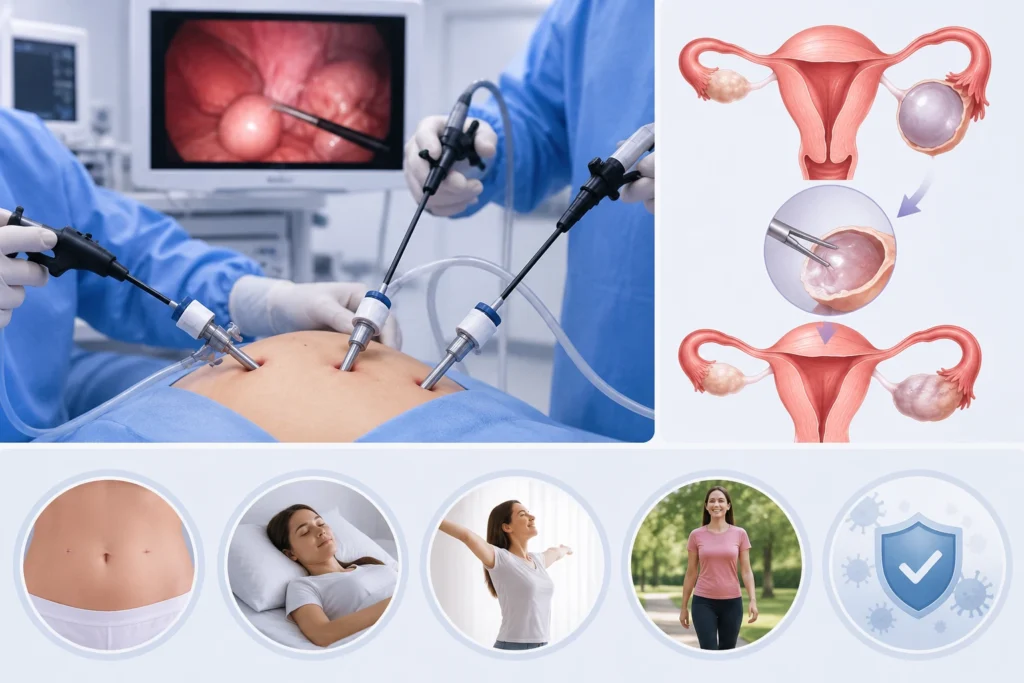
Laparoscopic Ovarian Cyst Removal: Benefits and Recovery Introduction: Ovarian cysts are filled sacs that grow on or inside the ovaries. Many ovarian cysts are harmless. Go away on their own. Some may cause pain, discomfort, and irregular periods. In cases doctors often suggest laparoscopic ovarian cyst removal as a safe and effective treatment. At Dr Supriya Mahajan’s clinic, doctors use laparoscopic techniques to ensure precise treatment with faster recovery and minimal discomfort. What Is Laparoscopic Ovarian Cyst Removal? So laparoscopic ovarian cyst removal is a kind of surgery that helps get rid of cysts without hurting the healthy parts of the ovaries. The experts do this by making small incisions in your abdomen and inserting a specialised tool with a camera known as a laparoscope. This tool helps the doctor see the ovaries and take out the cyst. This way of doing surgery is really good because it is not as invasive as the way of doing it. It is a choice for a lot of women who have ovarian cysts that are causing problems or will not go away. Laparoscopic ovarian cyst removal is an option for many women with ovarian cysts. Benefits of Laparoscopic Ovarian Cyst Removal Minimally Invasive Procedure Laparoscopic surgery for cyst removal is a small-incision surgery. It does not require a cut like traditional surgery. This leads to harm to the tissues around the cyst and a more comfortable healing process. Faster Recovery Time Most women can go back to their routines much sooner than with open surgery. They often stay in the hospital for a time. Many can resume their activities in a few weeks. Reduced Pain and Discomfort The small cuts from surgery usually mean less pain after the operation. This reduces the need for painkillers. It also makes the healing process more comfortable. Minimal Scarring Laparoscopic surgery leaves marks on the skin. These are less noticeable than the scars from traditional surgery. Lower Risk of Complications The small incision surgery helps lower the risk of infection, much bleeding and other problems that can happen with surgery. Preservation of Fertility In cases the cyst can be taken out without hurting the healthy part of the ovary. This helps keep the woman’s fertility and ability to reproduce.   Recovery After Laparoscopic Ovarian Cyst Removal Healing from surgery is usually easy and fast. Patients may feel some discomfort in the belly, bloating or tiredness for a few days. These symptoms get better over time. Some important tips for healing are: Follow the doctor’s instructions. Avoid work and lifting for the recommended time. Drink plenty of water. Eat a balanced diet. Go to all the follow-up appointments. Check the cut areas for signs of infection. Conclusion At Dr Supriya Mahajan’s clinic we focus on the patients’ needs. Use modern small-incision surgery methods. This provides treatment for ovarian cysts. We prioritise safety, comfort and reproductive health. Laparoscopic ovarian cyst removal helps women feel better from their symptoms. It also supports a smoother healing process. If you have symptoms of cysts or have been advised to have surgery, talk to Dr Supriya Mahajan. She can help you find the treatment options for your needs. Normal Delivery vs C-Section: What Is Safer for You?

Laparoscopic Ovarian Cyst Removal: Benefits and Recovery Read More »

Hysteroscopy: Why It Is Done & What to Expect During the Procedure

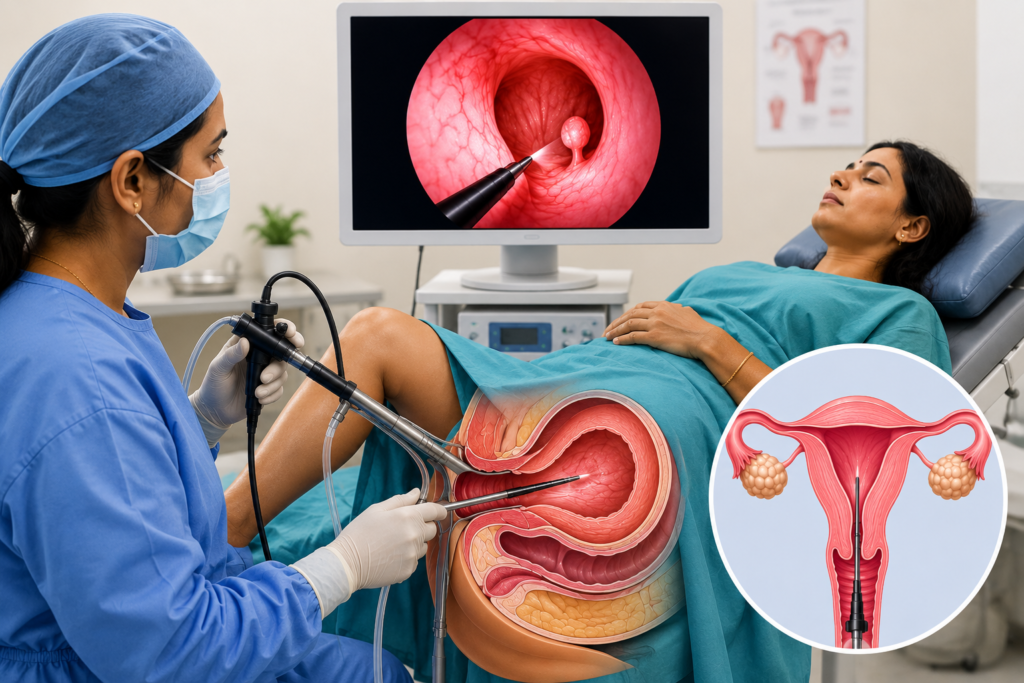
Hysteroscopy: Why It Is Done & What to Expect During the Procedure Introduction: Women may experience symptoms which include irregular bleeding and severe menstrual pain, along with difficulties in conceiving and experiencing repeated miscarriages. Doctors frequently use hysteroscopy as their method for diagnosing and treating uterine medical conditions. The procedure enables gynaecologists to conduct precise examinations of the uterine cavity while delivering treatment that needs no extensive surgical procedures. Dr. Supriya Mahajan’s clinic operates hysteroscopy services which use advanced technological equipment to provide medical treatment that keeps patients safe and comfortable throughout their entire procedure. What Is Hysteroscopy? The medical procedure known as hysteroscopy requires the use of a hysteroscope, which enables doctors to insert a thin, lighted instrument through the vagina and cervix to reach the uterus. Through the hysteroscope’s camera system, the doctor can monitor the internal structures of the uterus on a display screen. The procedure offers doctors two medical functions which they can use to diagnose and treat different gynaecological disorders. Why Is Hysteroscopy Done? Doctors recommend hysteroscopy for several medical reasons. The procedure enables doctors to discover uterine abnormalities while providing treatment for specific medical conditions. Common Reasons for Hysteroscopy Abnormal or heavy menstrual bleeding Irregular periods After menopause women experience bleeding Women experience pelvic pain which includes cramping Doctors use infertility assessment to detect fertility problems Types of Hysteroscopy  Diagnostic Hysteroscopy The procedure examines the internal uterine structure to find any existing problems. The method enables doctors to find fibroids and adhesions and polyps and structural abnormalities. Operative Hysteroscopy The medical team performs the procedure by inserting small surgical instruments through the hysteroscope to conduct immediate treatment of the identified medical issue. What to Expect Before the Procedure The doctor will recommend the following tests before the hysteroscopy procedure: The doctor will conduct a pelvic examination The doctor will conduct blood tests if required A pregnancy test will be conducted Patients should avoid food and drink for several hours in certain situations Recovery After Hysteroscopy Most women typically experience quick recovery, which enables them to return home on the same day. Common Temporary Symptoms Mild cramping Light vaginal bleeding Slight dizziness or fatigue The patients need to refrain from engaging in vigorous physical training and sexual contact during the first few days. The doctor will provide the necessary pain relief medications according to the patient’s requirements. Benefits of Hysteroscopy The procedure uses minimal entry points for surgical access The procedure requires no major surgical incisions Patients experience shorter recovery periods The procedure delivers precise medical evaluations which lead to treatment decisions The procedure requires a shorter duration of hospitalization The procedure helps some patients achieve better reproductive success Conclusion Hysteroscopy stands as a dependable and efficient method for detecting and treating multiple uterine disorders. The procedure provides women with a less invasive medical option which enables them to recover faster while achieving precise diagnostic results. Women who face unusual vaginal bleeding or difficulty becoming pregnant or any other gynaecological condition should see an expert doctor who has specialized knowledge in their field. Dr. Supriya Mahajan delivers expert gynaecological services through her advanced hysteroscopy techniques, which she modifies to address the specific needs of her patients. Normal Delivery vs C-Section: What Is Safer for You?

Hysteroscopy: Why It Is Done & What to Expect During the Procedure Read More »

Normal Delivery vs C-Section: What Is Safer for You?

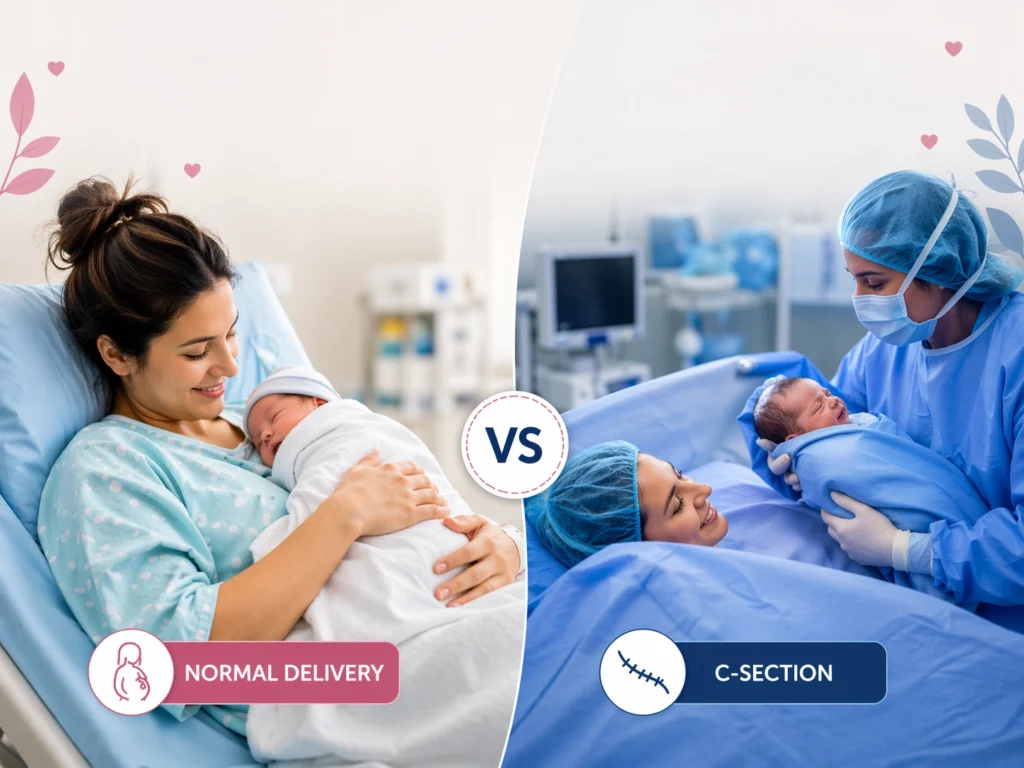
Normal Delivery vs C-Section: What Is Safer for You? Introduction: Pregnancy transforms a woman’s life entirely because expectant mothers must select between vaginal birth and Caesarean section as their delivery method. Medical professionals must evaluate both delivery options because both methods maintain safety through correct execution, yet medical practitioners should determine which method works best according to each patient’s unique health requirements and obstetric situations. The team at Dr Supriya Mahajan’s provides professional expertise which enables you to select your optimal choice through their tailored decision-making process. What Is Normal Delivery? Normal delivery is the natural process of childbirth where the baby is delivered through the birth canal without surgical intervention. Healthy pregnancies that experience no medical issues should proceed with this delivery method according to medical guidelines. Benefits of Normal Delivery: The mother experiences a faster recovery process.  The procedure results in reduced surgical complications for patients.  The patient needs a shorter period in the medical facility.  The mother and baby can start breastfeeding immediately after birth.  Newborns show decreased respiratory problems because of this procedure.  Normal delivery requires women to endure labour pains, which sometimes lead to tears or require delivery assistance through medical procedures. What Is a C-Section? A Caesarean section is a surgical procedure which requires doctors to deliver a baby through an incision they create in the mother’s abdomen and uterus. The procedure can be scheduled before the delivery date, or it can be executed as a medical emergency. When Is a C-Section Recommended? High-risk pregnancies The baby is positioned in a breech, which is an abnormal way to position himself. The placenta covers the cervix in a condition known as placenta previa. The mother is carrying multiple babies who are twins or more. Foetal distress occurs during labour. The mother has already delivered her baby through a C-section. Advantages of C-Section The medical team can plan and schedule the delivery. The procedure decreases the possibility of issues that arise during complex medical situations. The procedure eliminates extended labour discomfort. Disadvantages of C-Section Patients need more time to recover from their surgical procedure. The procedure creates a higher possibility that patients will experience both infections and other medical complications. The procedure results in extra time spent in the hospital, which leads to higher medical expenses. In certain situations, breastfeeding starts later than usual.  Which Is Safer? For low-risk pregnancies, normal delivery is usually considered safer due to fewer complications and quicker recovery. A C-section becomes the safest medical choice when patients experience specific health problems. Key Factors That Determine Safety: The complete health status of the mother The position and health status of the baby The existing medical complications of the pregnancy The complete medical background of the patient Conclusion  The delivery method needs to deliver a healthy outcome for both mother and baby. The decision-making process should begin with trust in your doctor while selecting the safest option to handle your unique circumstances. Regular prenatal visits paired with open discussions with doctors are the key to a healthy delivery. The clinic of Dr Supriya Mahajan offers not only medical skills but also services customised to the needs of the patients, protecting at the same time the highest levels of safety and comfort of the patients. Normal Delivery vs C-Section: What Is Safer for You?

Normal Delivery vs C-Section: What Is Safer for You? Read More »

When Should You Consider IVF? Signs You Should Not Ignore

When Should You Consider IVF? Signs You Should Not Ignore Introduction: Many couples see starting a family as their most beautiful dream, but some couples need to navigate difficult challenges during their family-building journey. Natural conception works for many people, but some people need medical help to overcome their reproductive difficulties. The medical procedure In Vitro Fertilization (IVF) serves as an effective treatment method for these particular situations. People need to understand the appropriate time for considering IVF because this knowledge enables them to seek help at the right moment, which leads to better treatment results. What is IVF? IVF is an advanced fertility treatment where an egg is fertilized with sperm outside the body in a laboratory. The resulting embryo is then transferred into the uterus. The medical procedure receives standard recommendations after all other fertility treatments have failed or when particular health conditions exist. Signs You Should Not Ignore The early signs of infertility need to be identified because they allow you to start appropriate treatment at the right times. The following indicators serve as crucial elements of evidence. 1. Trying to Conceive Without Success Women under 35 need to try to get pregnant for more than 12 months. Women over 35 need to try to get pregnant for more than 6 months. The fertility specialist should be consulted because IVF needs to be considered as an available solution. 2. Irregular or Absent Menstrual Cycles Ovulation problems can be detected through irregular menstrual periods. The fertility problems associated with PCOS (Polycystic Ovary Syndrome) require IVF and other assisted reproductive techniques for treatment. 3. Blocked or Damaged Fallopian Tubes The fallopian tubes serve as essential pathways for natural conception to take place. When infections or surgeries cause blockages or damage to the fallopian tubes, IVF uses external fertilization methods to solve this problem. 4. Male Infertility Issues Low sperm count and poor sperm motility as well as abnormal sperm shape create challenges for natural conception. IVF with ICSI (Intracytoplasmic Sperm Injection) will increase the fertilization success rates. 5. Advanced Maternal Age The quality and quantity of eggs in women undergo a decline as they grow older. Women over 35 face greater difficulties with natural conception, which makes IVF the recommended method because it offers better success rates. 6. Recurrent Miscarriages Experiencing multiple miscarriages can be emotionally and physically challenging. The combination of IVF and genetic testing enables the identification and selection of healthy embryo candidates. 7. Unexplained Infertility The test results show normal results, but conception does not happen. IVF provides a systematic and organized method that increases the likelihood of achieving pregnancy. Benefits of Considering IVF Early  The procedure raises success rates for achieving pregnancy.  The procedure helps discover hidden fertility problems. The service provides multiple treatment methods which include embryo freezing and genetic testing.  Conclusion  Infertility presents overwhelming challenges, yet couples worldwide find relief through IVF treatment, which has assisted millions of couples since its introduction. Early warning signs need immediate medical evaluation because they lead to better health outcomes. You must consult a fertility specialist when you experience difficulties in conceiving because they will help you understand your treatment options. Your first step today will help you achieve your parenthood dream. When Should You Consider IVF? Signs You Should Not Ignore

When Should You Consider IVF? Signs You Should Not Ignore Read More »

High Blood Pressure in Pregnancy: Causes, Symptoms & Treatment

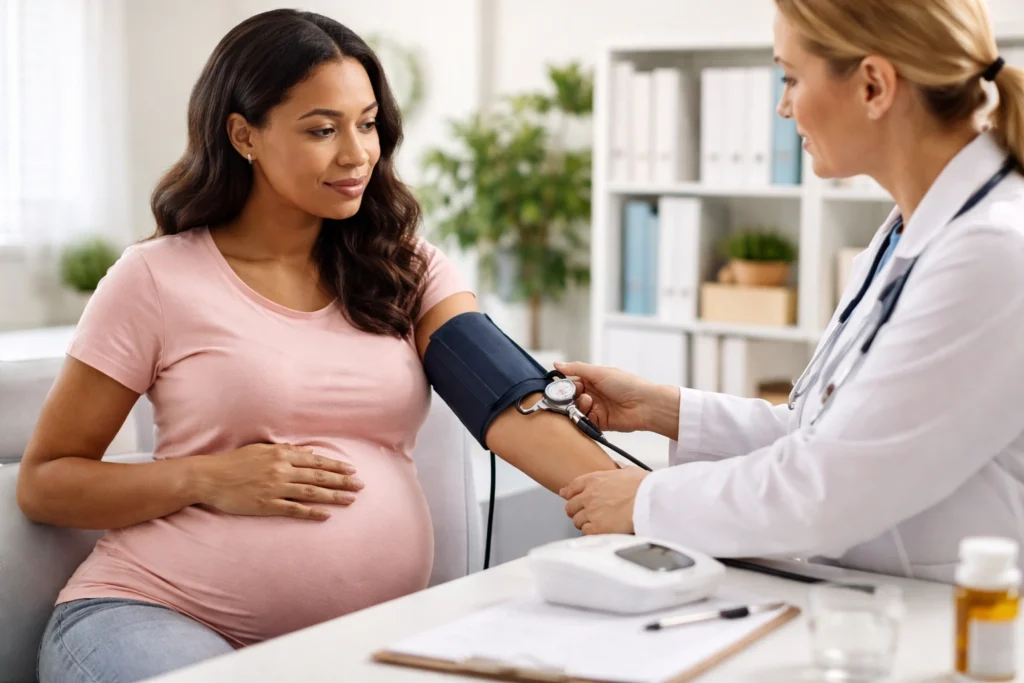
Introduction: The beautiful journey of pregnancy results in various bodily changes which women must experience. High blood pressure which doctors call hypertension requires special monitoring throughout pregnancy. When not managed properly the condition affects both the mother and her unborn child. By knowing the causes and symptoms and treatment methods expecting mothers can protect their health and safety throughout their pregnancy.  What is High Blood Pressure in Pregnancy? High blood pressure in pregnancy occurs when the force of blood against the artery walls becomes too high. During pregnancy people experience hormonal and physical changes which lead to conditions that cause their blood pressure to exceed normal safe levels.  Doctors usually diagnose high blood pressure when readings reach 140/90 mmHg or higher. The condition requires constant medical monitoring because it develops during pregnancy. Common Causes of High Blood Pressure During Pregnancy Common causes include: First-time pregnancy Family history of high blood pressure Obesity or excessive weight gain during pregnancy Carrying twins or multiple babies Pre-existing medical conditions such as diabetes or kidney disease Age over 35 years Types of High Blood Pressure in Pregnancy Pregnant women experience various types of high blood pressure which medical professionals need to understand for effective treatment development. 1. Gestational Hypertension The condition starts after 20 weeks of pregnancy and usually disappears after the woman gives birth. The condition needs medical observation because it has the potential to develop into serious health complications. 2. Chronic Hypertension This type occurs when a woman already has high blood pressure before pregnancy or before 20 weeks of pregnancy. Symptoms of High Blood Pressure in Pregnancy High blood pressure often does not produce any visible symptoms for most people. The need for regular prenatal checkups exists because of this situation. Some women will develop warning signs however. Possible symptoms include: Severe or persistent headaches Swelling in the face, hands, or feet Blurred vision or sensitivity to light Shortness of breath Nausea or vomiting Risks Associated with High Blood Pressure The medical condition of untreated hypertension during pregnancy creates multiple health risks that affect both the mother and her unborn child. Potential risks include: The placenta experiences decreased blood circulation The delivery of the baby occurs before the standard birth date The baby is born with a weight that falls below the normal range The placenta detaches from its normal position Treatment and Management The medical treatment of high blood pressure during pregnancy requires assessment of both the pregnancy stage and the hypertension severity. Doctors focus on protecting both the mother and the baby. Common treatment approaches include: The patient receives ongoing blood pressure assessments The patient receives medication that meets safety standards for use during pregnancy The patient attends scheduled prenatal health check-ups The patient requires sufficient time for recovery while learning to handle stress Conclusion High blood pressure during pregnancy is a condition that should never be ignored. With early detection, proper treatment, and regular prenatal care, most women can manage it successfully and deliver healthy babies. Our website provides experienced professionals who will help you if you show symptoms or need guidance about your pregnancy. We help ensure a safer and healthier pregnancy journey.

High Blood Pressure in Pregnancy: Causes, Symptoms & Treatment Read More »

Call Now Button