
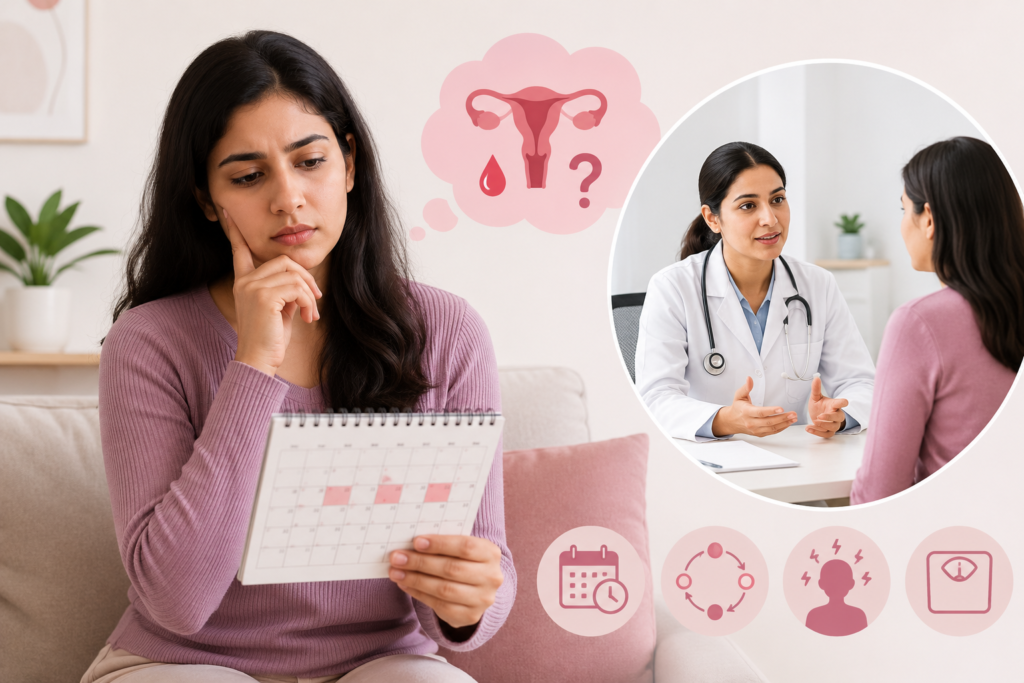
Irregular Periods: When Should You See a Gynaecologist?
Introduction:
Menstrual cycles are different for each woman. Having a regular period is usually a good sign that your reproductive health is fine. If your cycle changes occasionally, it is usually not a cause for concern, but if it happens a lot or all the time, you should not ignore it. If you have persistent irregular periods, consult a gynaecologist, and they can help discover the cause of the problem and make sure you are treated in time.
What Are Irregular Menstrual Cycles?
A normal menstrual cycle occurs every 21 to 35 days and typically lasts between 2 and 7 days. Menstrual cycles are irregular when they do not happen normally.
Menstrual cycles are considered irregular when:
- Your menstrual cycle occurs less than 21 days apart or more than 35 days apart.
- Your periods are unusually heavy or unusually light.
- Your periods last longer than seven days.
- You might see some blood between cycles
- Your periods stop suddenly without pregnancy. This is not because of pregnancy.
Common Causes of Irregular Periods
Many things can affect your period, including:
Hormonal Imbalances
Your period is controlled by hormones. If you have something like polycystic ovary syndrome or thyroid problems or high prolactin levels, this can affect your hormone production and your period.
Stress and Lifestyle Factors
Stress is a thing that can affect your hormones, whether it is physical stress or emotional stress. If you do not sleep well, exercise too much, have sudden changes in your weight and eat unhealthy foods, these things can also affect your period. Your period can really be affected by stress and lifestyle factors.
Polycystic Ovary Syndrome (PCOS)
PCOS is a reason for irregular periods. Women with PCOS often experience irregular or missed periods, weight gain, acne, excessive facial or body hair growth, and difficulty conceiving. .
Perimenopause
As women approach menopause, their periods can change. Irregular bleeding is normal during this time. It’s still a good idea to see a gynaecologist.
Uterine Conditions
Fibroids, polyps, endometriosis and adenomyosis can cause bleeding and pelvic pain.
Treatment Options for Irregular Periods
Treatment depends on the underlying cause of irregular periods, which is different for each person, and it depends on what is causing the problem. The doctor may suggest some things to help, such as:
- Changing your lifestyle like finding ways to deal with stress and maintaining a healthy weight
- Taking medicine to help with hormones or using birth control pills
- Getting treatment for thyroid problems or hormone issues
- Managing Polycystic Ovary Syndrome (PCOS)
- Taking medicine to help with heavy bleeding
If you have a treatment plan that’s just for you, it can really help you get your periods back on track and feel better overall.
Conclusion
If your periods have become irregular or are affecting your daily life, don’t ignore the symptoms. Early diagnosis can help identify hormonal disorders, thyroid conditions, PCOS, or other underlying health issues. Consulting an experienced gynaecologist can help you receive the right diagnosis and personalised treatment for better reproductive health. If you are looking for expert women’s healthcare, Dr Supriya Mahajan provides comprehensive evaluation and personalised treatment for menstrual disorders and a wide range of gynaecological conditions. Schedule a consultation to receive timely care and protect your reproductive health.
