
Pelvic Floor Health After Baby: What’s Normal and How to Support Your Recovery
Post-Birth Your body takes time to heal and get back to itself after a delivery. Most moms experience changes with bladder control, vaginal health or pelvic strength. And while changes in the body are to be expected when carrying a baby and going through a delivery, it doesn’t mean these things should go unnoticed.
This guide explains how to support your pelvic floor recovery after childbirth, including gentle exercises, healthy habits, and when to seek professional guidance from Dr. Supriya Mahajan, an obstetrician and gynaecologist in Thane.
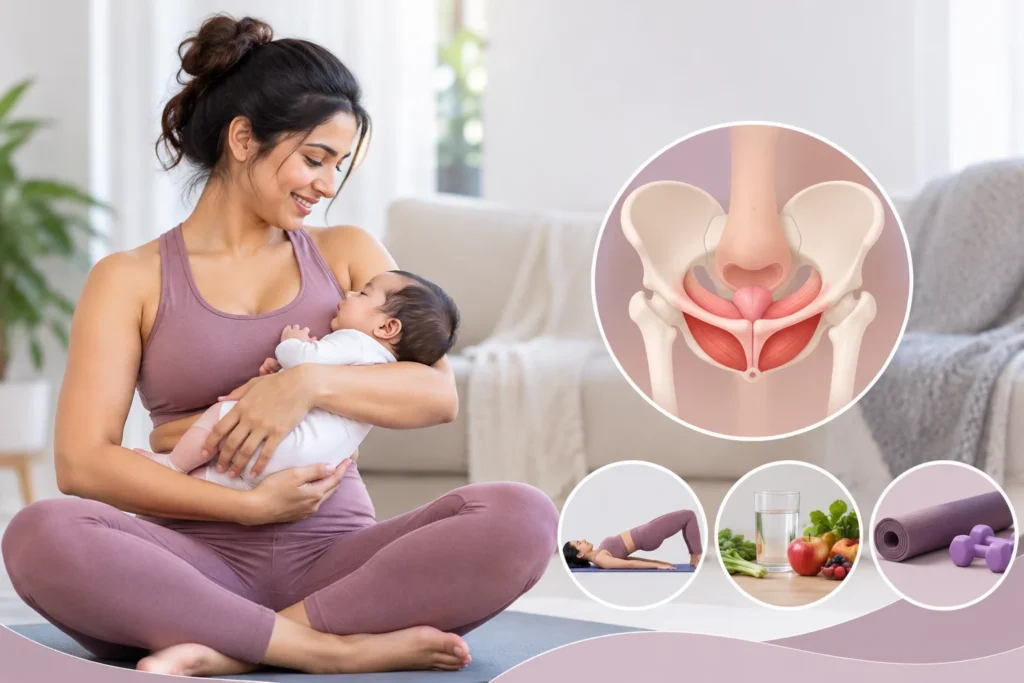
What Is the Pelvic Floor?
The pelvic floor is a group of muscles and tissues that keep your bladder, uterus and bowel in place. They also assist you in urination and bowel movements.
During pregnancy, the baby puts more strain on the muscle. Vaginal delivery can stretch these muscles even more, while a caesarean birth can damage the pelvic floor because of the changes due to pregnancy.
What Changes Are Normal After Child birth?
Your recovery is influenced by how you delivered, your general health, and the experience of your pregnancy. Changes may resolve by themselves as your body recovers.
Frequent postpartum alterations are:
- You might notice some leaking of urine when you cough, sneeze, laugh, or exercise.
- There are some women who have heaviness around the vagina or pressure in that area.
- Soreness and tenderness can occur after a vaginal delivery.
- Pelvic floor muscles might be weak.
- Breastfeeding can cause a woman to experience dryness or pain during sex.
Help on Recovery of the Pelvic Floor
1. Practise Gentle Pelvic Floor Exercises
Pelvic floor exercises: these help to tighten the pelvic floor muscles that support the bladder.
Practice yourself to tighten the muscles that hold in the fart. Contract gently, hold briefly and then let out completely. Do not squeeze or clamp your stomach, thighs or butt muscles during this activity.
2. Ease into Exercising
Your body needs some time to recover after giving birth. Rest initially and do a little bit of walking each day.
Don’t participate in vigorous activities, for example, jumping, lifting, heavy weight training or any other form of exercise, if urinating leaks out and you feel pain or pressure in your pelvic region.
3. Prevent Constipation
Don’t force yourself to open your bowels, as this can put a strain on the pelvic floor. Drink lots of fluids, eat fibre to make your stool bulkier and go to the loo when you feel the urge. If your constipation continues, your doctor will advise treatment.
4. Get Enough Rest
Rest promotes healing after birth. Don’t lift heavy objects unnecessarily and ask family members to help you with household chores when feasible.
Conclusion
Pelvic floor care after a baby is an integral part of postpartum recovery. Postpartum pain, urine leakage and pelvic muscles may weaken, but you need not put up with these until the infant is weaned. Pelvic physiotherapy, mobility exercises, eating well, and getting expert support will help you heal and get back on your feet. If you experience persistent urine leakage, pelvic pressure, pain, or other concerns during postpartum recovery, consult Dr. Supriya Mahajan, an obstetrician and gynaecologist in Thane, for appropriate evaluation and guidance.
